
Choosing to Limit Myself
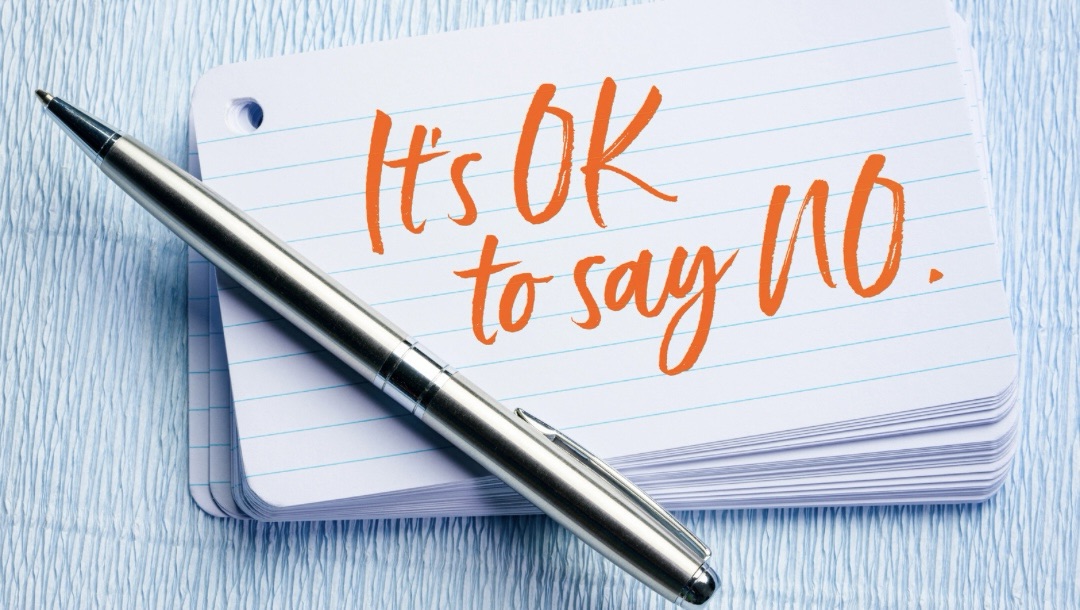
I recently had someone describe her problems to me as rooted in co-dependency. She could see that her choices had become so enmeshed with another person’s responses that she no longer knew what was hers and what was the other person’s. The solution she came up with was to set more boundaries in her life.
She recognized that the lack of distinction in her own identity left the door open for others to manipulate her and use her to meet their own personal needs, often to her detriment. Letting people do this had at first seemed to be a loving thing. It was how she felt accepted. But as this tendency continued, she realized she was often left empty, confused, and unsure of who she was anymore. Having no personal boundaries actually devalued her. This revelation gave hope that life could be different if she could change. Of course, there is a lot of work ahead. She is like so many of us who do not easily accept restrictions on how we operate.
What is it about boundaries we don’t like?
Fences seem to put out an invitation to be climbed. There always is something on the other side that is attractive, making promises, or declaring a new level of righteousness or pleasure for those bold enough to ignore the old ways and push beyond set limits. Laws become suggestions or challenges to just not get caught violating them. Rules are quickly judged to be unjust or frivolous. We humans find all kinds of ways to discredit limitations. That is unless we can start to see that some (and perhaps all) are meant to protect us from harm and allow us to grow.
Obeying the Commandments
The Bible is full of instructions. Many take the form of commandments. Our present generation bristles at the thought of being commanded to do or not do anything. Yet this word is another way to talk about boundaries. Biblical boundaries, when they are rightly understood, offer a kind of protection. Like many other kinds, when honored, they provide opportunities for us to clarify our value, our identity, our lives as we were meant to live. They were meant to help us thrive!
Jesus was approached one day by a young man who asked how he could attain eternal life (Matthew 19:16-22; Mark 10:17-22; Luke 18:18-23). His first words directed the man to the Commandments. He listed them: “Do not murder, do not commit adultery, do not steal, do not give false testimony, do not defraud, honor your father and mother” (Mark 10:19 ESV).
They were all drawn from the BIG TEN listed by Moses in the Old Testament. And amazingly, the man said he had kept them all since his youth (unless, of course, he was lying which would have been giving false testimony). What is interesting here are the commandments from the Ten that Jesus DID NOT mention. The first four are left off His list: “You shall have no other gods before me. You shall not make for yourself a carved image . . . You shall not take the name of the LORD your God in vain . . . Remember the Sabbath day, to keep it holy” (Exodus 20:3-8 ESV).
What was Jesus getting at?
Boundaries that Give Life
Jesus perceived that this young man had a boundary problem. He had not put any limits on what he loved. He had not accepted the fact that he could love the wrong things, which would eventually destroy and cut him off from the eternal life he was seeking. The Commandments that he could not say he had kept – which he had learned to ignore – were the four that dealt with how we are to honor and love God above ANYTHING ELSE.
Jesus went straight for the spiritual jugular vein. “You lack one thing: go, sell all that you have and give to the poor, and you will have treasure in heaven; and come, follow me” (Mark 10:21 ESV). More than God, the man loved his wealth and the power it gave him. We are told he went away sorrowful. Jesus had touched the one thing on which the man refused to put any restrictions.
The limits we allow to be put on our lives and choices define not only our values but also our identities. While many of us probably have the same boundary issue as this rich young man, it is likely that we have others as well. All God’s commandments are meant to protect us from that which will carry us farther from Him. Boundaries determine not just where we are but even more so about who we are. They give us definition, determining our edges, what we are becoming and what we are not becoming. They shape us into God’s children.
Thus, when God sets boundaries on the words we use, how long we hold offenses, and the images with which we fill our minds, He is seeking to give us a certain contour. He wants us to look more and more like Him. Boundaries on how we express our anger, our sexuality, our desire for comfort, control, and meaning, as well as how we do our relationships are all meant to protect us from drifting from the One who is our life source. They give each part of our lives a unique eternity-affirming shape.
Banks of a River
A teacher once challenged me to live my life as a river as opposed to a flood. What is the difference between the two?
Boundaries.
Whereas a river is water with banks that keep it narrowly contained, it also is powerful, deep, focused, and useful. A flood, on the other hand, is also water but with a different outcome. It is free to go wherever because nothing constrains it. But the results are what we call a disaster. It leaves everything damaged in its wake. It is shallow, out of control, and in the end produces nothing of value.
Just as setting healthy boundaries on our relationships (saying “no” to co-dependency) can actually bring healing and health, applying God’s boundaries to ALL PARTS of our lives can bring a new level of wholeness. The Ten Commandments have been described as God’s Love Laws. They, along with many other guides and commands in the Bible are not there to control us. They are given to help us thrive within the limits we were designed to live. Outside them we may experience a sort of freedom for a short while but not the kind in which we can experience long-term health and intimate connection with our Heavenly Father.
Learn to embrace limits. Learn from the One who designed you. He loves you and me enough to say, “No.”
Response:
- What is my emotional response to words like “commandments,” “rules,” “laws,” “restrictions”? What does my response tell me about how I perceive boundaries that are put on me?
- Which of God’s Commandments or Rules am I resisting? What might be the reason that I struggle to accept His restrictions?
- What might change in me if I was to start seeing God’s Boundaries as expressions of His love and protection, and desire for me to thrive?
- Jesus, how might my resistance to Boundaries be keeping me from experiencing the fullness of intimacy with you?
(Edited and reposted from May 22, 2023, as “Choosing Boundaries”)
 Choose This Day