
Choosing to Accept Restrictions
Often, the secret to success with any endeavor is learning the basics of a needed task. Trust the tried-and-true process. I believe this can apply to almost any skill. I remember my dad teaching me to wash a car: always start at the top and work down. That basic idea seems to work well for almost any type of cleaning.
Learning to drive a car at age 16, I thought I was a pro within the first couple days. Practicing regulating my speed and judging braking distance felt too basic after my first week behind the wheel. I was itching for “Indy 500” experiences. However, after nearly running off the road while taking corners, almost rear-ending cars in front of me, and having a head-on collision on a dirt road, I finally adjusted my thinking. Maybe I should master the fundamentals before testing how fast I could drive.
Another example was learning to write. My teachers provided the parameters and rules of composition. Correct spelling, no run-on sentences, organized paragraphs, proper punctuation, etc. But it all felt so restricting. I had story ideas and deep thoughts that needed to get on a page. My teachers, however, were turning papers back to me with big red question marks next to most the paragraphs. Were they just too slow-witted to recognize brilliance? After a while, it hit me that I needed to learn to write more clearly. And that meant, among other things, applying the rules they were talking about. My ability to express myself grew as I took their directions seriously and submitted to instructions.
The Disgusting Word
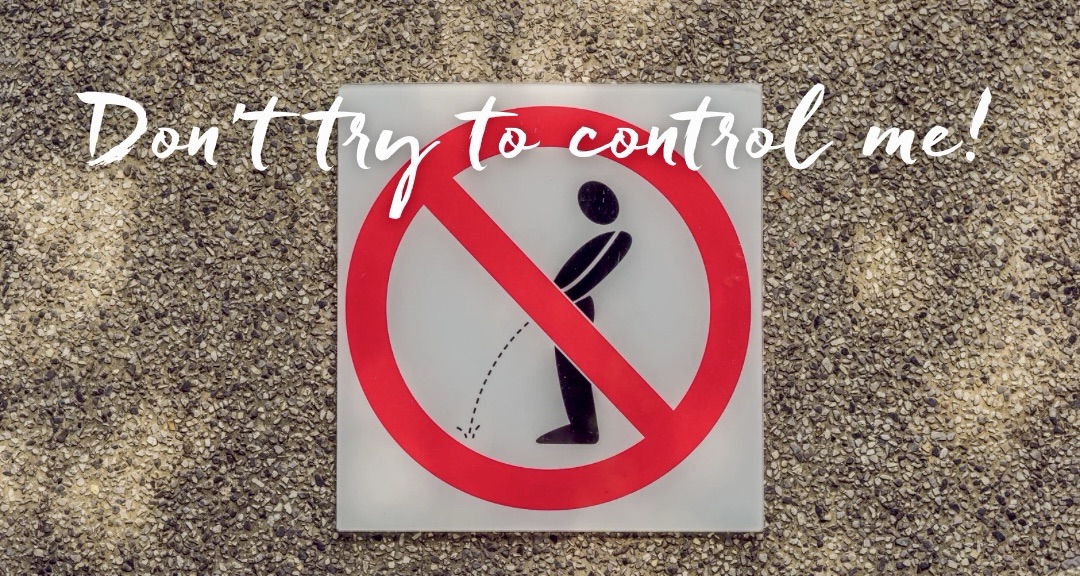
Living within restrictions or boundaries feel unpleasant to most. We look for ways to get around them. It is a growing part of our culture to perceive restraints – particularly restrictions that limit self-expression or the maximizing of personal pleasure – as wrong, and even, evil. And thus, the word “obey” can send waves of disgust, fear, and instant rebellion through many. Yet, learning to work within rules and instructions are so often the key to success and satisfaction.
When a person’s default is to resist limits or authoritative guidance, he or she has a hard road ahead. Obedience is a skill that when properly applied contributes to success. Sure, there are constraints that need to be challenged, unfair rules that should be discarded. Not all boundaries contribute to flourishing. But many are there to help us grow and thrive. We need to make sure we first understand why there are limits present in the first place before we start blindly disregarding them.
It’s a Big Deal
Jesus, Lord of heaven and earth and the maker of all things, had a few things to say about obedience.
“Why do you call me ‘Lord, Lord,’ and not do what I tell you? Everyone who comes to me and hears my words and does them, I will show you what he is like: he is like a man building a house, who dug deep and laid the foundation on the rock. And when a flood arose, the stream broke against that house and could not shake it, because it had been well built. But the one who hears and does not do them is like a man who built a house on the ground without a foundation. When the stream broke against it, immediately it fell, and the ruin of that house was great” (Luke 6:46-49 ESV).
Disobedience to the right things can ruin us! Jesus connects obedience to His words with stability, particularly of our “houses,” that is our lives. Obedience rightly done leads to a greater ability to persevere and come through the storms of life intact. This is true for activities like cleaning, driving, and writing as I have already mentioned. But it is especially true in our walk with Jesus.
To Obey Jesus
What are some of the things Jesus has told us to do?
- Repent (Matthew 4:17) – change the way you think and act about sin, God, and others.
- Forgive those who offend you (Luke 17:3-4) – every time.
- Give no place for lust (Matthew 5:28-30) – in thought or action.
- Do not worry about the stuff you need (Matthew 6:25) – your life is more than material things.
- Deny yourself (Luke 9:23-25) – so you can save yourself from the pit that slides into narcissism.
- Serve others (Matthew 20:26-28) – especially the ones you are leading.
- Love your enemies (Matthew 5:44-46) – and pray for the ones who are mean to you.
The list could go on. Obedience to His words changes lives, ours and those around us. Yet the more I read about what He told His followers to do, the more I must admit I need help. His commandments are not easy, and some feel impossible. But thankfully, there is also the understanding in the scriptures of grace – divine help and empowerment for those who call out to Him in faith.
We often disobey because somethings are simply hard to do. But there are other reasons we humans disregard authoritative commands:
- We distrust the motives of the rule maker (maybe we need to study more about God’s character).
- We demand that everything makes sense (sometimes understanding comes after obedience).
- We believe our freedom is being taken away (but are we free to obey?).
- We want to stay in complete control (but that is impossible).
- We like the feeling of rebelling (because we do not like the feeling of submitting).
The truth is, that for followers of Jesus, there is no other way but obedience. He said, “If you love me, you will obey my commandments” (John 14:15-17). Obedience is a return to the basics of the Christian faith. It is the tried-and-true process of being a disciple. If we are not obeying Him then we are not really serving, loving, or following Him.
As difficult as it may be, it is that simple.
Response:
- How well do I commit to following through with basic instructions? What within me does not like to do it the way I’m told to do it?
- What do I feel when I hear the word obey? How do my feelings affect my response?
- What does it look like for me to obey God? How does my picture of obedience align with the words and commandments of Jesus?
- Jesus, bring more stability into my life as I grow in obedience to your words.
(Edited and reposted from October 7, 2024 “Choosing to Obey”)
 Choose This Day