
Choosing to REALLY Change

I’m growing—particularly around my gut.
As I get older, I find myself fantasizing about coming up with a plan to return to my 18-year-old body, back when I felt no need to think about what or how much I ate. And it was more pleasant to look at, too. Of course, that has remained merely a dream. For me to get back even to what I weighed when I was a high-school student would take some major changes in my habits and lifestyle and perhaps my DNA. The problem is, I would like the fruit of the change, but I don’t want to—at least not badly enough—make the necessary changes.
This dilemma stretches into my spiritual life as well. The more I learn about the behaviors and attitudes that draw me away from God (see posts on the 7 Deadly Sins: Pride, Anger, Lust, Envy, Greed, Gluttony, Sloth), the more I like the idea of being rid of them. Afterall, life for a Jesus follower—or anyone, for that matter—is better without habitual sin (read my post on the “problem”). But, how to begin to make those changes? That’s a trick, if I truly want to learn it, that can be applied to every part of my life.
Changing Our Minds
It’s actually not a trick. It’s described in the Bible with a mundane word that is not in fashion too much today. Repent. It literally means to “think again,” or “to change the way one thinks.” It’s sprinkled all throughout the scriptures. And it’s usually associated with the process of dealing with sin in a person’s, or group of people’s, life (Ezekiel 18:30; Acts 2:37-38). Jesus used this word when He began His ministry. “Repent, for the kingdom of God is at hand” (Matthew 3:2). What was He intending the listeners to do? Well . . . to change their thinking patterns, particularly their ideas about the Kingdom of God and what His expectations were for them.
Read MoreChoosing to Admit I Can’t See

I have worked with some people over the years with serious pride issues. Surely you know the type I’m talking about. They see and hear only what they want and leave room for little to no outside input into their work, their projects, their relationships or their lives. They’re blind to everything outside themselves.
I remember one of my very first jobs working as a government employee. My immediate manager was tasked with training me to take over her job before she retired—that was the position I had applied for and what I was hired to do. The problem was, however, that she personally felt (I found out later) that I was being given this position at too young of an age. Afterall, she had had to work her way up over the years through the ranks having started as a janitor. I was a punk kid fresh out of college. So she stalled. I was given meaningless tasks for months but never trained to do any of her job. Many a night I fumed at home over this woman’s arrogance that she thought her personal assessment of me and the situation trumped what I had been hired to do. She was blind to my needs, my abilities, my ambitions and not least of all, our supervisor’s instructions. And I was being abused in the process. But of course, she thought she knew better. So I quit.
Ouch!
After recalling this little piece of my history, I’m reminded (uncomfortably so) that people who are walking in pride typically are very sensitive to and angered by the pride they see in others. They rarely, however, see it in themselves. That doesn’t reflect well on me.
Pride has traditionally been recognized to sit enthroned at the top of the Seven Deadly Sins.* Just as countless other sins have been understood to flow from the Seven (pride, lust, sloth, gluttony, greed, envy and anger), the other six have been recognized to flow from pride. It’s the headwaters, the source. Every sin humans commit is tainted with pride. It’s even been called the “original” sin. But of course, most of us, including myself, don’t see pride as our issue. It’s those other people that need to learn some humility. Right?
Read MoreChoosing to Separate Lust from My Identity
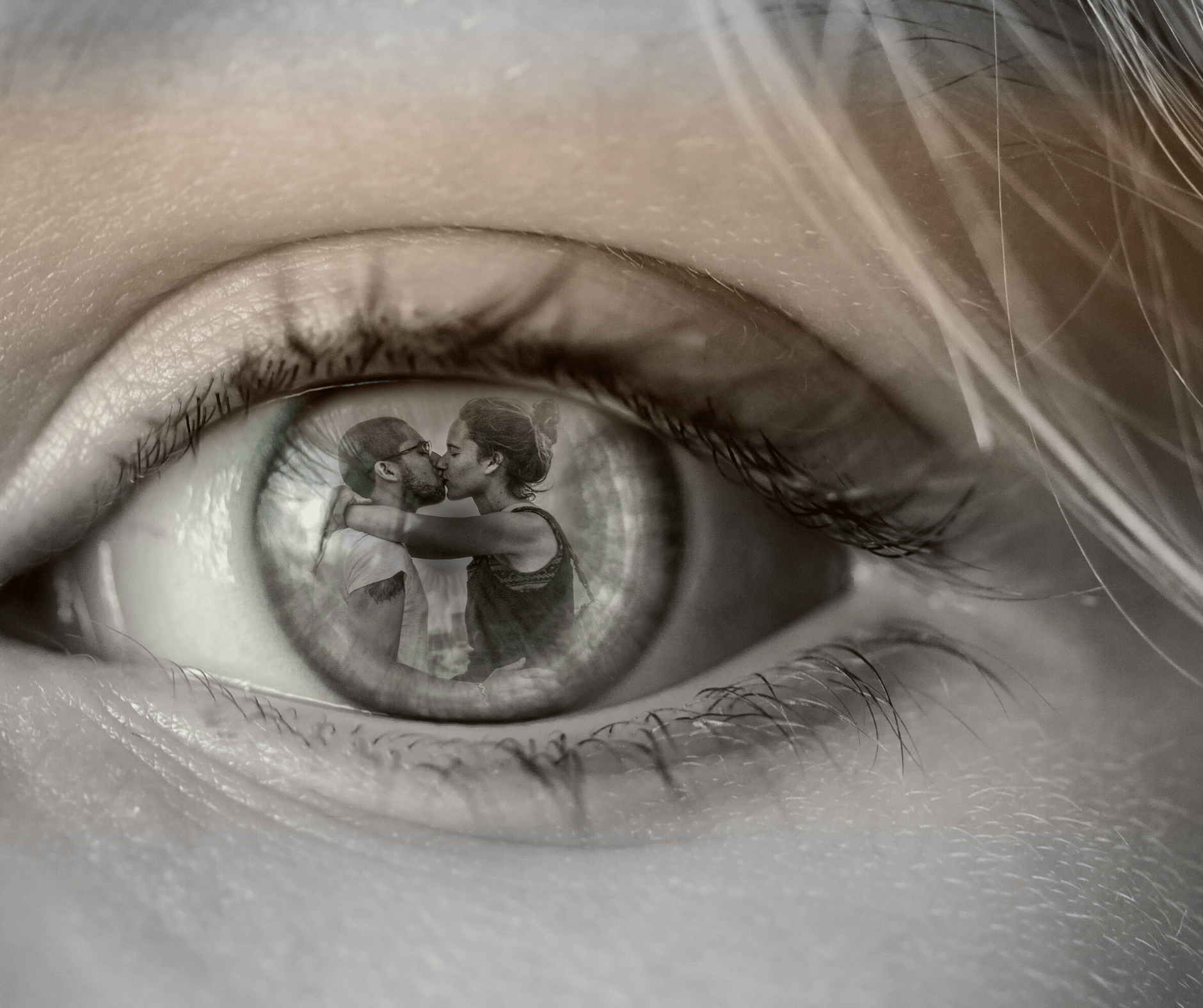
Jesus said it quite bluntly: “You have heard that it was said, ‘You shall not commit adultery.’ But I say to you that everyone who looks at a woman with lustful intent has already committed adultery with her in his heart” (Matthew 5:27-28 ESV). And for the past 2,000 years it has been listed as one of the traditional Seven Deadly Sins.*
Lust.
What is it exactly? And is it as bad as its membership in the infamous club of seven vices suggests?
The most basic meaning of the word “lust” is desire, an overpowering longing. It’s something that stews inside me before any kind of outward behavior is displayed. It’s a feeling that is so strong that it often convinces me it’s completely natural and an integral part of who I am. It gets mixed up with my identity and therefore sometimes is justified and defended as simply the way God made me and therefore something I can’t help. I therefore feel justified in exploring it and at times celebrating it.
But, as Jesus implies and many passages in the Bible show, it is a doorway-sin that takes me away from how God designed me to live. It also disrupts how I relate to God and others. And it all starts with the interplay of my mind and emotions. My thoughts and feelings work together to create a world within in which my desires and their fulfillment is king. Lust is a sin because it seeks to dethrone Jesus from the center of my heart.
Read MoreChoosing to Live in Two Realms

A few days ago, I returned from a three-week outreach trip in a tropical island nation. I witnessed God at work in some very exciting ways, opportunities to pray with individuals, physical healings and transformed communities. It all filled me with renewed hope that He is very active in the world and His kingdom is here and expanding!
But, being just south of the equator, I also sweated more than I ever have in my life. In addition, I slept on some very hard floors. The combination of heat, high humidity, body odor that comes with such conditions as well as unmaintained outhouses and bathing in rivers smothered my Minnesota-trained senses. There were many less-than spiritual experiences. Without air conditioner, electric fan, running water or a soft mattress I found myself constantly focusing on my physical discomfort. It screamed at me for attention! And it took great effort to stay tuned-in to what God was doing and saying.
Oh how easy it is to dwell on surface-level feelings and perspectives as opposed to the eternal, non-perishable qualities of life. God was touching people’s lives around me, and I was day-dreaming about Coca Cola and ice cubes.
Read MoreChoosing to Do It Anyway

Energy. To have it pulsing through my body, my mind and my emotions gives me a greater sense of being alive. I long for the vigor and strength to do the things I want to do. The older I get the more I value this commodity because I find that it is not as plentiful as it used to be. So I seek to protect the energy I do possess by selecting activities, projects and even relationships according to the internal stores of emotional and physical fuel I feel that I have in reserve.
Of course lack of energy for life is not just an old person’s issue. As a teenager, depending on how I perceived my social life was going at school could determine any given morning whether I had the drive to get out of bed. And if I felt I had nothing to look forward to, I could quickly feel myself turning into a blob on the couch in front of the television.
There are many ways we talk about this issue of personal energy: enthusiasm, hopefulness, focus, positivity, passion, optimism, zeal, conviction, joyfulness. They’re all vibrant qualities we desire for ourselves and value in others because they provide fuel for life. But when we don’t have these, what’s going on? While there can be varied reasons for our lack of soulful energy and activity, including chemical imbalances and harsh circumstances. I want to explore a possible spiritual contribution as well.
Read MoreChoosing Light Over Darkness

I remember as a child being afraid of the dark. It was in the blackness of night that the monsters, the “boogey man” and all my unspoken fears, manifested. Unlit buildings paralyzed me with fright. Sleeping with the light on seemed like a good idea. As a child it was always easy to see that bad stuff hides in the shadows.
So, how can the statement in John 3:19 be true? “People loved the darkness more than the light.” What could possibly make darkness so alluring that humans feel affection for it and prefer it?
The Attractive Side of Darkness
As I got older, games in the dark became fun. We played one where an individual, “the wolf”, would hide in a wooded area at night. A group would search without lights, then run back to base before the “wolf” could catch them. Shadows were my friends when I was the one hiding. As the wolf, darkness emboldened me. I would terrorize people with sounds and movements that imitated wild animals—or maybe even worse things. Often it worked, with the searchers timidly feeling their way through the underbrush, jumping at the slightest rustling of bushes, screaming with fright. The ability to easily hide made me feel powerful, and energized an annoying side of my personality. Perhaps darkness wasn’t always undesirable after all; it felt nice, like a comfortable, protective yet exhilarating blanket.
Read MoreChoosing to Put My Feelings on a Diet

“I just want to feel good.” This is the mantra I’ve heard from many people over the years who are trying to figure out their existence. Confusion, discomfort, boredom. They’re looking for something that makes life feel better—worth living, that takes away the discomfort or at least distracts from it.
Yes, I can somewhat relate. I put food into my body that isn’t healthy—even when I’m not hungry. I watch stupid movies that I forget (or wish I could) as soon as they’re over. I randomly scroll through the internet looking for articles or sites that merely pique my curiosity but have no real substance. I hungrily check my social media posts to see how many “likes” they got. I thirst for affirming interaction with those who will agree with my thoughts and views. And I yearn to discover a trendy cause that I can get passionate about. I even take ibuprofen more often than I should.
Why?
I too want to feel alive, happy, active, filled, pain-free and stimulated. That’s what the voices around me say is the essence of life, afterall.
What is it, really?
There’s this word we don’t use much anymore. Gluttony. It’s another one of the traditional Seven Deadly Sins.* I have simply understood it to mean overeating—which at times has confused me as to why stuffing my body with food is listed as one of the big seven. Overeating may contribute to obesity and heart disease, but calling it a cardinal sin with deep spiritual ramifications? That doesn’t make a lot of sense to me.
Yet like all sin, there’s usually more to it than what my cultural environment has allowed me to absorb.
Read MoreChoosing to be a Learner

All through my early years I saw myself as a humble man. The fallacy of that image was exposed the day I was informed that the one-on-one, who I understood would be my “mentor” in the YWAM training program was a single, 19-year-old kid. I was a married, 32-year-old father of three. I could feel the walls going up inside. It was clear to me that there was nothing of value I could possibly gain from this arrangement. God had obviously stepped out of this one. And that was the attitude of my heart for quite awhile after that.
Receiving the Words of Jesus
Jesus said, “If you hold to my teaching, you are really my disciples” (John 8:31 NIV). I have always appreciated learning. I study the Bible and have sought to educate myself on all its contexts. The words of Jesus are the foundation of the Christian faith, so of course I want to comply with what He says. This is what it means to be a follower of Christ: agree with the teachings of Jesus, right?
Jesus’ words above sound great to my ears until an uncomfortable reality pushes in. He wants to drill deeper than mere intellectual acceptance. He often seeks to plant His teachings in my heart through instruments and circumstances I don’t like—painful events or people who seem unfit for imparting wisdom. I resist. This forces me to then ask the question, am I truly teachable? Can I absorb God’s truth for my life regardless the situations through which it is delivered?
Read MoreChoosing to Rid Myself of Sticky Fingers

A good story almost always requires a villain. Everyone loves to detest and blame that guy who is despicable. And what is easier to despise than a creep motivated by pure greed?
In movies, a hero commonly struggles against a filthy rich tycoon or corporation seeking to add to their already-huge pile of money. The greed of the wealthy is a motif routinely used in Hollywood and politics because of its almost-universal capacity to stir up deep emotional responses—usually animosity. It’s a theme that has struck a chord in every generation. Afterall, it is so satisfying to see such evil motivations and actions exposed and justly punished!
But is greed a sin exclusive to the 1%?
Read MoreChoosing to Follow the Magi

Christmas stirs my imagination. Not only can I endlessly ponder the significance of our eternal God becoming a full-fledged human, I am intrigued by the variety of responses in the Bible to this event: Bethlehem shepherds awestruck by an angelic light show; Nazareth residents scandalized by an unwed pregnant teenager in their tight-knit community. Jerusalem’s citizens and king confused and disturbed that a new king is being announced when the old one is still on his throne. But the characters who arouse my curiosity the most are the Magi from the East. Depending on the Bible translation one uses, they are also referred to as kings or wise men in the Gospel of Matthew.
So, what makes them special?
Read More Choose This Day