
Choices and More Choices

“Chicken, beef or vegetarian?”
The text was from the planners for an upcoming banquet. My meal choice was needed and I quickly shot back my answer. I was hungry.
Ahh, wouldn’t it be nice if all decisions in life were that easy?
They’re not. Most the time I hate being pushed into issuing a verdict. I often try to put off coming to a conclusion as long as possible because I naturally doubt my initial conviction. Yet it seems there’s always some kind of decision I’m being asked to make—financially, vocationally, relationally, politically, ethically, spiritually, medically, nutritionally, etc., etc. Some feel easy, some seem irrelevant, while others overwhelm me as completely impossible. And I must remember that procrastination and even not choosing at all are all choices. I can’t get away from them!
Following Jesus is the choice I want to focus on. It’s actually a decision made up of many choices: daily, hourly and even minute by minute. They determine what I believe, think and do, as well as how I react, love, hate, give, trust others, and distract myself, all in light of truly being a follower of Jesus. And sooner or later an outcome chases after each one—outcomes, that for better or worse, I must own.
Consequences
Joshua said it several thousand years ago, “Choose this day whom you will serve” (Joshua 24:15). He was fed up with the people of his country waffling on important issues like who their god was going to be. I find, however, that I so dread the thought of being stuck with the results of a bad choice (I don’t have all the information after all) that I look for ways to avoid committing at an intersection in life. Saying ‘yes’ to one thing means saying ‘no’ to one or more others. What if a better option comes along? Can’t I just hold off and sit here for a while, no obligations? Of course I can; that’s a choice. And it will eventually produce some kind of consequence.
As a result, it’s easy to just let life happen, which is releasing others to make choices for me. That then becomes my choice with its own set of consequences. I’m sure that some who were listening to Joshua were thinking, if not saying out loud, “But what if a better god comes along?” Hmm. And how did that work out for them?
They’re Ours to Own
The irony of making decisions is that while we want, and even fight for, the right to make our own choices—resisting the commands of those “Joshuas” who want to control us—we also struggle with it. There are many times we would rather someone just tell us what to do. Choosing can be hard and confusing work. It’s nice to have someone who’s figured it out give us the answer. And if in the end their judgment was wrong then it wasn’t our fault. Right?
Unfortunately, for that way of thinking, an irrefutable law stalks us: everything about our choices belong to us. We choose, whether we realize it or not, how we respond to everything that is thrown at us, even the things we didn’t choose: our DNA, our upbringing and all those crazy, painful outside circumstances or abuses. Though it feels like we don’t have a choice, we still must decide our response, our attitude and our actions. What we do with all that is given or thrust upon us is ours! And as much, if not more, these choices are what make us who we are, for good or for ill.
A lot of Choices to Examine
I want to use this blogging space going forward to talk about what it means to move through every day as a follower of Jesus, depending on His grace but recognizing all the choices before us. There’s actually many to look at because walking with Jesus involves our entire life—every part. And like so many other choices, not committing or half committing our lives to Him (is it possible to half-commit to my wife?) has an eternal consequence.
So, take Joshua’s challenge and choose. Some choices will be as simple as deciding between chicken or beef. Others will force you to search more deeply, determining WHO you’re going to serve each day. And your options are quite limited on that last one. For, as the Bible communicates and one of our American cultural prophets, Bob Dylan, has said, “You’re gonna have to serve somebody. It may be the devil or it may be the Lord, but you’re gonna have to serve somebody.”
The choice is yours.
Reflections
- What are some of the choices I regularly make that I rarely if ever think about?
- In what ways do my everyday choices reflect my level of commitment to following Jesus?
- What is the most powerful influencer of my choices? Circumstances? Feelings? Values?
I’m Choosing to Do Something a Little Different

I started making weekly posts on “Choose This Day” seven years ago because I had so many things I wanted to express. Pondering the choices that followers of Jesus have to make seemed the best fit for describing what I wanted to talk about. I’ve been happy to see that the posts (especially the archived ones) receive thousands of views each year.
I’ve been working on a book, a novel. It’s a mixed genre of historical fiction and fantasy. It’s plotted to be a series that explores theological, philosophical, and historical ideas that awaken and strengthen a sanctified imagination. I’m happy to say the first one is very close to being completed. But final edits, fine-tuning, and polishing of the plot, characters, and themes are proving time consuming. I have therefore decided to step back from weekly posts and focus my writing time on finishing this initial novel.
I may make occasional posts as new ideas or questions hit me. But it will be story writing that I mainly give myself to in the coming days and weeks. I look forward to when I can announce the first installment of the novel project is complete and ready to be shared.
In the meantime, I hope you will go to the archives and read or re-read posts that encourage and challenge you in making everyday choices to follow Jesus.
Lots of blessings!

Choosing to Trust When I Can’t See

I was five years old when I had my tonsils removed. Medical concerns and procedures were different back then. They had me spend the night before surgery in the hospital. I remember my initial impression was that of getting to do a sleep over at a hotel without Mom and Dad. Kind of exciting!
It all seemed great until I was taken in to be prepped for surgery early the next morning before my parents arrived. Everything quickly went blank when they put a cup over my nose and mouth. My strongest memory of the entire episode was a growing awareness of an intense sore throat while still in complete darkness. A disconcerting panic arose as confusing conversations from unseen bodies were taking place around me. I desperately wanted a light to be turned on. But there was nothing. Finally, one voice among the many stood out. My mother! And though I couldn’t see her, I knew she was there and that made all the difference. I was then able to be at peace. Everything would be okay because someone who I trusted to care for me was with me even though I couldn’t see.
When There’s No Light
Darkness stirs an assortment of emotions. Yes, there is the glory of the nighttime sky with the brightly shining stars or the beauty of a full moon casting its silver lining across the edge of a black horizon. But when it comes to navigating a path or figuring out what’s going on with no stars, no moon, and no lamp of any kind, the lack of light can be terrifying. Total darkness seems to scream that there are unseen terrors hidden nearby. Some kind of illumination is needed, something to guide, something to comfort. And so, we grasp at anything that might shine light on our path, even a tiny bit, to provide some sense of control.
Many years ago, I came upon a scripture in the Old Testament that I have returned to often.
“Who among you fears the Lord and obeys the voice of his servant? Let him who walks in darkness and has no light trust in the name of the Lord and rely on his God. Behold, all you who kindle a fire, who equip yourselves with burning torches! Walk by the light of your fire, and by the torches that you have kindled! This you have from my hand: you shall lie down in torment.” (Isaiah 50:10-11 ESV)
Read MoreChoosing to Let Myself Go Hungry

While in college years ago, I joined several of my classmates in Washington D.C. to lobby U.S congress in support of a bill that was to provide funds for famine-wracked nations in Africa. We had been challenged by a speaker in our college chapel service to do something. It’s not difficult to come to the conclusion that letting people starve is wrong. Food is such a basic thing for human existence, and there’s plenty of it in this world. No one should have to go hungry. And in our youthful zeal, we stormed Capitol Hill.
I still believe this. But, considering the obesity problems in North America, my opinion has become more nuanced. A commitment to eradicate hunger is not the same as concluding that any hunger pang must immediately be satisfied. Food scarcity is real. So is overeating. Studies continue to confirm that fasting can have very positive physical and mental effects when it’s a chosen discipline. And of course there are the spiritual benefits as well.
But the universal truth is, no one likes to feel hungry. Even healthy fasting tends to start with headaches, irritability, difficulty concentrating, persistent hunger pangs, weakness and fatigue. Advertisements for foods I don’t even like can make me salivate. I remember years ago, while on a fast, seeing raw beef liver in a butcher shop and thinking I would gladly have it for lunch. And I hate the taste of liver.
Going hungry is not fun.
Hunger in the Bible
In the scriptures, when the Israelites were preparing to cross the Jordan River into the Promised Land, Moses talked to them about hunger. He said it was purposeful.
“And [God] humbled you and let you hunger and fed you with manna, which you did not know, nor did your fathers know, that he might make you know that man does not live by bread alone, but man lives by every word that comes from the mouth of the LORD” (Deuteronomy 8:3 ESV).
According to these words, God sometimes lets people go hungry. That doesn’t seem at all kind. But the verse also says that God gave them food, manna from heaven. It’s just that manna was strange to them, not what they were used to, and definitely not what they wanted.
Read MoreChoosing to Learn from Others
“Experience is the best teacher.” I have heard this statement in multiple forms over the years and can attest to the truth it contains. There are some life lessons it seems cannot be taught from a book or a lecture. How does a person learn patience or endurance? How does one learn the true weight of grief or how to forgive another from the heart? And we can hear someone preach every day that money cannot buy happiness. But for it to truly sink in someone must first feel the emptiness of putting one’s hope in possessing material power.
Yet, this can be taken to an extreme. Some, particularly those categorized as youth, often demand they be left alone to learn from their own experiences. Picture eyes rolling as an old person gives a teen warnings and “helpful ideas” for how to do something or how to avoid some unnecessary pain.
Learning from others who have gone before us has usually been understood as wisdom.
“Whoever walks with the wise becomes wise, but a companion of fools will suffer harm” (Proverbs 13:20 ESV).
“Iron sharpens iron, and one man sharpens another” (Proverbs 27:17 ESV).
“Listen to advice and accept instruction, that you may gain wisdom in the future” (Proverbs 19:21 ESV).
Become Wiser
There are multiple ways to do this if someone is truly interested in growing in wisdom. Learn to listen more than you speak. Reflect on what you hear. Push advice out to its logical conclusion and imagine where you might end up if you apply what someone is telling you. Choose to cultivate humility: I understand this to mean always viewing myself as a learner, regardless my age, my experience, and my IQ. And as a starting point, I should ask God to teach me what the scriptures call “the fear of the Lord.” Proverbs 9:10 says, “The fear of the LORD is the beginning of wisdom, and the knowledge of the Holy One is insight” (ESV).
On a practical level, I need to find people wiser than myself in areas where I am weak. I need to hang out with them. Just because I know a lot about one topic or aspect of life does not mean I am an expert on all things. I have come to see that people younger than me, with less formal education, and from other cultures all have insight and understanding that I am lacking. Wisdom tells me to swallow my pride, shut up, listen, and learn. And maybe in the process I’ll be asked to share a few things I have learned from my life experiences.
Read MoreChoosing to be a Good Big Brother
Tension between siblings has been around for a long time. Movies love this theme: Mufasa versus Scar in The Lion King; Thor versus Loki in the Marvel Universe; Michael versus Fredo in The Godfather Part 2; Tommy versus Brendan in Warrior. Legends say that the city of Rome started with two brothers, Romulus and Remus, vying for supremacy. Romulus finally killed Remus. And of course there are the biblical examples: Cain and Abel, Esau and Jacob, Joseph and all eleven of his brothers.
Even now, outside of cinematic stories and ancient tales, siblings fight with tragic consequences. I recently read this headline in The Minnesota Star Tribune: “Man angered by brother not picking up after himself fatally stabs him in Minneapolis home, police say.”* It doesn’t seem to take much to set off siblings to be at each other’s throats.
A Hero’s Family Issues
One biblical rivalry that I have only recently begun to ponder is that of David and his brothers. There was tension between him and the oldest, Eliab. In 1 Samuel 16, the prophet Samuel comes to the house of Jesse, directed by the LORD, to anoint one of the eight sons as the next king of Israel. Samuel assumes it will be the oldest, Eliab, a leader and experienced warrior in Israel’s army. Instead, the “insignificant” youngest who was not even invited to the meal is chosen. We are not given insight into Eliab’s thoughts until the next chapter. The little shepherd-boy, David, shows up asking a lot of questions as Goliath the giant comes out from the Philistine camp to mock Israel’s army.
Big brother says to little brother, “Why have you come down here? And with whom did you leave those few sheep in the wilderness? I know how conceited you are and how wicked your heart is; you came down only to watch the battle” (1 Samuel 17:28b NIV).
Before David fights big Goliath, he has to deal with his big brother. Eliab was clearly triggered by David being there. He, after all, was a mature, experienced warrior. His baby brother, who has been given the idea that he will one day be king, is now acting like he can do something that none of the other seasoned fighters can do.
Read MoreChoosing to See My Separation from God

I remember the first time I stole something. I was six or seven years old, and I walked out of a store with a candy bar in my pocket. When I didn’t get caught and nothing bad happened, I was surprised. As a child I then decided it wasn’t really wrong to take something from someone when you wanted it more than they did. A few years later, however, when my bike was stolen, I changed my mind. There was something messed up about the world when people could actually steal from me.
I was on to something. Every philosophy and religion recognize there is something fundamentally wrong with the world. Most, however, disagree on what the fundamental problem is. What exactly is the root of human dysfunction? It’s all around us. Even a child can see there’s something wrong with the way things work.
The word “sin” carries varying definitions and innuendo depending on who uses it. To some, it might mean socially unacceptable behavior, while to others it could be nothing more than a mistake or a weakness. Still others see it as a silly or overly restrictive, outdated concept that shouldn’t be taken seriously; after all, we have evolved beyond the need for such primitive explanations of the human situation. And then there are those who only see the wrongdoing in others, never in themselves.
There is a growing group of people who choose to see sin as having nothing to do with morality but rather understand it to describe purely an ontological problem: physicality is what’s wrong with the world. If we could find a way to shed our corporeal entanglements and escape to a purer spiritual state of being, then we would experience “salvation.” Sin or evil, in this way of thinking, is nothing more than being stuck in a material world.
But how do these varying perspectives account for a world that so easily justifies stealing candy bars and bicycles and much, much worse?
Cut Off from God
The Christian faith teaches that “the problem” is related to human choices. It’s a moral issue. It manifests as rebellion against divine order. Instead of submitting to God’s rulership, we are driven to operate as individual masters of our own kingdoms. We’ve chosen to do things our way, separate from our Creator’s intentions and instructions. It has disrupted and twisted everything.
The problem isn’t always immediately recognizable in us because it’s an accumulation of all the little choices to do life without God. It is ultimately rooted in our alienation from all that God is, a heritage going back to our very first ancestors. We were designed to live in close, intimate connection with Him. But long ago in a garden, the choice to defiantly take one bite from a piece of fruit (Genesis 3) started an avalanche that carried all humanity out of God’s presence. The result is a spiritual and moral infection that has tainted all that was created good with deadly consequences. And that’s what the Bible calls sin.
Read MoreChoosing to Be Combative
Though I could be quiet and reserved as a child, I had a belligerent side as well. I got into quite a few fights—the kind that included punching, slapping, kicking and bloody noses. Before you form a mental picture of me as a delinquent hooligan, I can honestly say all the incidents pitted me against a bully and usually on behalf of another who was smaller. One time, I even hit a girl who was physically assaulting a small boy (not all bullies are males). Even with such chivalrous zeal, I took a few beatings and didn’t always walk away as the victor.
I now look back and like to think of myself more as a resister than a fighter. I didn’t, and I still don’t, like to see people get pushed around by oppressors and tormentors. Yet even as an adult, I see them all around. The real bullies and hidden enemies, I now understand, are the ones that pull the strings behind stage. We don’t see them. They’re incorporeal spiritual beings. But there is still a need to stand up to them.
Who is the REAL enemy?
The Bible tells us to resist the devil and he will flee from us (James 4:7). Whether we think about having an invisible enemy who bullies us or not, the scriptures have a lot to say about such a being. We are instructed in more than one place to stand against and even wrestle the spiritual forces that are harassing, confusing and oppressing us. There is no room for passivity in the Bible when it comes to spiritual opposition. We are instructed to know who our real enemy is and who is not.
Read MoreChoosing to Please God First

Voices. They ring in my ears and shout in my mind. I don’t seem to be able to rid myself of their pressure. They want to be my guide, to instruct me in what I ought to do. They cajole, threaten, rationalize, alarm, accuse and soothe me at different moments. Often the easiest thing to do is submit to their demands. Is this my version of going crazy? Or is it an internal obstacle course that every human navigates? When I stop to honestly examine what’s going on, I find the common thread of these cries to be distress and anxieties about what others are going to think of me. These voices are powerful, and they expect to be obeyed.
The closest explanation I find in the Bible labels what I’m experiencing as the “fear of man.” This sensitivity to others’ opinions and voices works to keep me on a certain path. Where this road leads, I have no idea. I just know that it feels intolerable to stray from it. Only later, sometimes much later, I realize it has taken me to places I didn’t want to go. I then see that I was listening to the wrong thing.
“Fear of man will prove to be a snare, but whoever trusts in the Lord is kept safe” (Proverbs 29:25).
The Bible reveals that there is a trap laid for me, and I must be alert. If my ultimate concern when making decisions is appeasing the demands and expectations of people (be they inside or outside my head) I will eventually be caught in something that keeps me from going where I truly need to and want to be. And it will be exceedingly difficult to get out of it. How to avoid such a snare? Trust the Lord and not the smooth-sounding or coarse-accusing voices ringing in my ears.
Read MoreChoosing to Love So It Hurts
I first wrote the words “I love you” in a note to a girl when I was in the 5th grade. It felt good. And the feeling was even better when I received a note back with the same words. A core belief took shape in me. From that point on, I understood love as something that was meant to make me feel good. Of course, my 5th-grade love affair didn’t last long (I was too shy to actually talk to her). But the impression that love is defined by how another person makes me feel, stuck.
And then I encountered God.
Believing in His unconditional love felt good too. But He asked me to love others in the same way—even those I don’t like. How is that possible? If I didn’t have “the feeling,” how was I to love them?
Later in life, I remember reading through the book of Isaiah, grimacing over the descriptions of God’s loathing of sin and what it has done to His creation. Where was His love in all this? No good feelings here. It felt as though divine frustration was ready to destroy everything! But then the words of John 3:16 pushed into my mind. And I was struck with the awareness that even with God’s hatred of evil He longs to find ways to express His love and affection for those He has created. The familiar Bible verse declares God’s love to be an action, not a feeling! It shows how far His love is willing to go to deal with the sin problem.
But how does this change how I love?
Read MoreChoosing Adventure
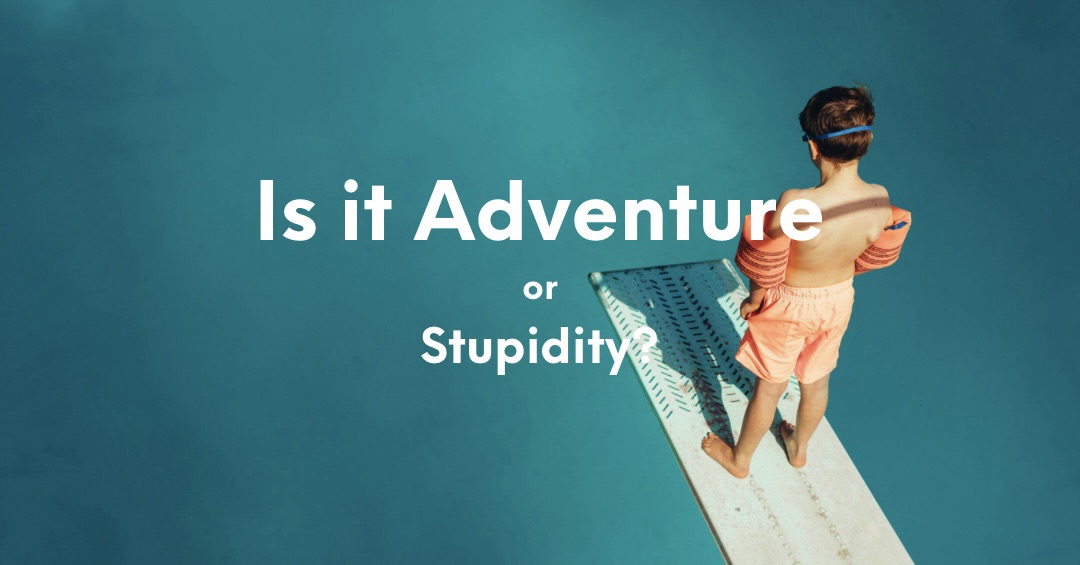
I recently traveled to Central Asia where a small group of us visited rural villages in a remote mountain range. Our purpose was simply to pray. Believing in the power of intercession, we asked God to bless these communities that, as far as we know, have never had a witness of Christ. We asked for spiritual hunger to be given, and at the right time, a witness of the gospel to be planted among them. It was personally stretching with days of rain, hours of climbing, treacherous mountain roads, high altitude, and the strangeness of a culture and language we had to depend on translators to navigate. We never knew what was going to happen next, but overall it was a very positive experience.
It was an adventure!
Coming home, I had to navigate some changes in my family, relational and job-related tensions, as well as financial uncertainty. It was stressful. I didn’t know what was going to happen next in most these situations. I got through it, but overall they did not feel like positive experiences.
Why did I NOT call my homecoming an adventure?
Double Minded?
With a bit of reflection and prayer, I can now see that both sets of circumstances were filled with uncomfortable situations. They each left me with the feeling that I was not in control of what was going on around me and that I was going to have to respond somewhat blindly to what happened next. Yet, one invigorated me and the other forced me to dig deep into previously untapped reserves of endurance to get through. Why did they feel so different?
Read More
