
Choosing REAL Satisfaction

I was encouraged as a child to memorize the Ten Commandments. The meaning of the rules seemed clear to me except the last one. “Thou shalt not covet.” Around that same age, I heard the word “covenant” used in a Sunday-morning sermon. Jesus had come to make a new covenant with us. It seemed strange then that God commanded us not to do something that Jesus came to give us. Years later I sorted out the difference. But even today, the meaning of the word “covet” can be fuzzy for me and many Jesus followers. How did it make it into the list of the Big Ten? Why is coveting so bad?
I eventually concluded that coveting is all about desiring things I don’t have. This understanding fed a mindset I had developed growing up that it was best to not want things so I wouldn’t be disappointed. As a result, I taught myself to live with little, letting desires die that felt beyond my reach, labeling many of them as “bad.” The reasoning was usually something like this: if I desire it, it must not be God’s will. This worked fine when I was single but didn’t fly once I got married and started a family. Those dependent on me didn’t have the same tolerance for doing without. And there was also that growing suspicion that many desires weren’t dead, just buried and still trying to come out of the grave—zombie-like. Cravings deep inside were still longing to be satisfied. And I was afraid of the temptations and disappointments I would have to face if they ever made it to the surface.
What’s the Focus of My Desire?
Here’s one English dictionary definition of the word “covet”: “to desire wrongfully, inordinately or without due regard for the rights of others.” This is helpful, but there’s more to it. The original Hebrew word “chamad” translated into English as “covet” simply means “desire.” The same Hebrew word is used in Psalm 19:10 where the writer is reflecting on the goodness of the Lord’s commandments: “More to be desired [chamad] are they than gold, even much fine gold; sweeter also than honey and drippings of the honeycomb.”
Is the Bible saying there are desires that are good and should be encouraged?
Read MoreChoosing to Keep the End in Mind
I had a short stint running track when I was in middle school. It was enjoyable until the coach put me in an 800-meter race that I had not prepared for. As a sprinter, I applied what I knew and started out strong. But halfway through I had nothing left and ended up coming in last place. Not only was that the last track meet I ever participated in, but it was also the day it dawned on me that what is reserved for the end of a race is just as important, if not more so, as what is put in at the start. I have to keep the end in mind.
Of course, beginnings are important. Poor starts in athletic events, and life itself, can make winning seem impossible. But even with a disappointing outset, the end is never fully determined until the crossing of the finish line or the ticking of the last second off the clock. It’s true of races, soccer matches, and football games. The way a person or team finishes, more than how they begin, says much about who they are and what they value.
This is true for how life and faith are lived out as well.
They Were Chosen, But . . .
The Bible is full of stories of people who started out well but are now remembered for their poor finishes or completely missing the target. Saul, the first king of Israel, comes to mind. He seemed to be such a humble unassuming guy when he was first anointed to lead Israel. But by the time his reign ended, he was ignoring all the instructions of God’s law and prophets and was a paranoid and unstable man. And then there was Judas. Chosen by Jesus as one of the Twelve, he had every opportunity to be remembered as one of the pillars of the Christian faith. Instead, he ended up being a thief and betraying Jesus for a bag of silver.
Strong beginnings in life are helpful. But it is how one finishes that speaks the loudest and most powerfully impacts those watching.
Read MoreChoosing the Old Way to Freedom
The New Testament scriptures speak of the followers of Jesus being set free. The Apostle Paul said, “For freedom Christ has set us free; stand firm therefore, and do not submit again to a yoke of slavery” (Galatians 5:1 ESV). Jesus, himself, said, “. . . you will know the truth, and the truth will set you free” (John 8:32 ESV). Freedom is a powerful word. But I’m not sure if everyone interprets it in the same way.
A typical 21st Century individual might look at these verses and think that Jesus is saying that if we’re following Him we can throw off all restrictions. We’re not required to submit to anything or anyone that seems unworthy. We can do whatever we want! We’re free!
At least that’s what it sounds like.
Some Things Have Changed
But after a little bit of digging, it would be discovered that our modern understanding of freedom is very different than what the ancients typically understood it to mean. It was in the 1600’s and 1700’s that the idea of freedom began to shift and be defined as the absence of external obstacles, that is the ability to act according to your own will without interference. In other words: freedom gives you the space to choose whatever you want to do, even to choose badly.
Before that, going back to the New Testament and then the Medieval period, freedom (or liberty) was seen as the capacity to pursue and do what is good. To become truly free, one had to rid himself of moral corruptors that would get in the way of choosing virtues such as love, courage, wisdom, and justice.
Read MoreChoosing to Continue to Choose that One Person

This Friday, my wife and I will celebrate 44 years of marriage. We were both 20 when we said, “I do,” having first met when we were freshmen in high school. Many times, I’ve been asked two questions:
1) how did we know that we had found the right person to marry (afterall, we were so young), and
2) what has been the “key” to staying married?
There are no simple answers, and this journey of walking out a marriage covenant hasn’t always been smooth. Much of what I think now about relationships has solidified through hindsight and many years of reflection. But I’m confident of this, if I had to do it over again, I would still choose Christine.
I Pledge Myself to . . .
Commitment isn’t an enjoyable word for most of us. Present-day American society operates from the understanding that the more options one has in any area of life, the better: streaming services, smart phone apps, salsa brands, and even dog food, to name a few (read post Choices and More Choices). Commitment, on the other hand, implies narrowing one’s focus, energy or affection down to a single point and saying “no” to the rest.
The average person today asks, “Why would I limit myself and choose before knowing ALL my options?” Such a response exposes a common fear: what if I commit and then something better comes along? The potential of getting stuck with a “second-rate” alternative (no matter how good it is) creates anxiety. We dread the possibility of future frustration, with restrictions on getting what we really want (though we don’t know what that is). It has become a 21st Century virtue to always keep our options open as we search for the “perfect” scenario, or person. Thus, we have become a generation of relational dabblers, rarely experiencing the mysterious fruit that comes from binding ourselves to another, long-term through whatever may come.
I have learned that commitment, whether it be in marriage, friendship, ministry or work, unlocks doors of opportunity and satisfaction that the open-option approach keeps sealed shut. True commitment changes the way we think about and see others as well as ourselves. When chosen, it exposes and can squeeze out narcissistic tendencies as well as establish a platform for true giving. In the end, its fruit delivers something more solid and lasting than a lifetime of playing the field. If my hope for happiness centers on finding the ideal partner who will meet all my needs and desires, I will never fully commit to anyone. After all, the person of my dreams might be just another date (or marriage) away.
Choose Wisely
I want to make an important distinction. There are smart commitments, and there are stupid commitments. Before I give myself to another person (emotionally, physically, spiritually), I need to know with whom I am connecting. What character qualities (or personal standards) dominate the individual? Does she truly listen? Does he admit when he’s wrong and sincerely apologize for hurtful behavior? Does she communicate honestly what’s going on inside her? Does he control his physical appetites? Does she recognize in a healthy way her value as well as her faults? Does he know how to sacrifice his self-interest for the sake of others? Are we going in the same direction?
Appearances and first impressions can be deceiving. The outer moral or spiritual trappings matter little if these and other solid inner attributes are missing.
It is foolish to commit myself to another who is not showing real movement toward life-affirming character qualities. In the end, I must take care to not fall in love with and give myself to a mirage. When I commit, it is not to an ideal or what I believe the person is capable of becoming but rather to the concrete character he or she is demonstrating NOW—good or bad. That is what I will have to live with.
Therefore, I must take the time to carefully observe on the front end, before I give my heart away and commit myself to any intimate relationship. The important question is not, “Can I have fun and feel good with this person?” More importantly I need answers to whether or not I can fully trust this person—to always tell the truth, to have self-control, to humbly apologize, to love unconditionally, to never give up, etc.
Accepting the Risk
It is thought best these days to cohabitate before marriage in order to know if the person is the right one. Sort of like test-driving a car before you commit to the purchase.
I challenge this conventional “wisdom” with a couple thoughts.
Typically, the logic of living together before marriage is to avoid the possibility of a future divorce (and to save a few bucks on rent). Yet, cohabitating inevitably becomes “marriage” without the legal constrictions (or protections). To eventually breakup and move out because it’s not working is very much like a divorce. It has all the accompanying personal doubts and emotional wounds that are natural with joining yourself to another and then ripping yourselves apart. It’s just easier to hurt one another and leave without working on it when there’s no required legal procedure. All this to say, it is not set up to instill any sense of relational security.
In addition, no matter how much time you spend with a person before marriage (cohabitating or not), you never fully know him or her. There is something about binding yourself to another through marriage that then opens your eyes to previously unseen things (some beautiful, some unpleasant). In other words: make a smart commitment and study the person’s character as best as you can but realize that there will always be an element of risk. You simply CANNOT know everything beforehand. And yes, that can be scary, but it’s the nature of any intimate relationship.
Learning to Appreciate
It wasn’t until Christine and I got married that we realized how little we had in common. She liked to plan how we were going to use our weekend; I liked to just let it happen. She enjoyed games and outdoor activities; I enjoyed reading a book. She preferred to process her thoughts out loud; I preferred to process them in my head. She valued always having a clean house; I valued always having the freedom to clean whenever I felt like it. And the list could go on. As you might imagine, we experienced a good amount of tension, arguments, and anger, as well as we accused each other of just plain being wrong about many things. Fortunately, we shared a common faith and a high value for people and relationships. This helped lead us to jointly engage in ministry activities that were part of positively shaping our marriage.
I look back now and see that we went through a process. We started by trying to change each other to fit with what we were each most comfortable. That didn’t work and never does. Slowly we began to tolerate our differences and eventually accepted them (for the most part). But we entered the most transformational and fruitful stage when we set about truly appreciating our dissimilarities. We finally recognized the richness that comes from being united with someone who thinks and does things differently. I can now say that I am a better person because I have been married to Christine. I feel like a wealthy man (though I don’t have a lot of money). And I hope she can continue to say the same about being married to me.
It’s Not a Feeling
So how did we know for certain we had each found the right person to marry? We didn’t. But even as teenagers, we saw qualities in the other that we admired and over time found that we could trust each other. It was then a matter of taking the risk of committing ourselves with the mutual determination that we were not going to give up. Marriage was the commitment. It’s what we choose again and again each day.
Ultimately, the key to longevity for us has been in honoring our vows. Commitment is not a feeling I have toward my wife. It is a decision I made long ago. It’s also a daily choice to bind myself to her and allow myself to be changed for the sake of loving her. And, thankfully, good feelings are often present.
This is what protects our relationship when circumstances challenge and romantic feelings drift a bit: I take you, Christine, in sickness and health, for richer or poorer, in good times and bad, when we agree and when we disagree till death do us part.
And may Jesus always be honored in our commitment to each other.
I choose you again today.
Response:
- What is my understanding of commitment? In what ways am I attracted to the “freedom” to say “yes” to whatever or whoever comes along?
- When is it good to keep my options open? When is it merely fear of settling for second best?
- In what kind of relationships (romantic, family, friendship, work, ministry) do I struggle with commitment? Why is that?
- When in the past have I made a stupid commitment? What have I learned from that?
- What are the right kinds of risks to take in relationships and what are the wrong ones?
- How willing am I to let a committed relationship change me when it involves sacrificing my preferences?
- Jesus, what do you want to say to me about my commitment to others?
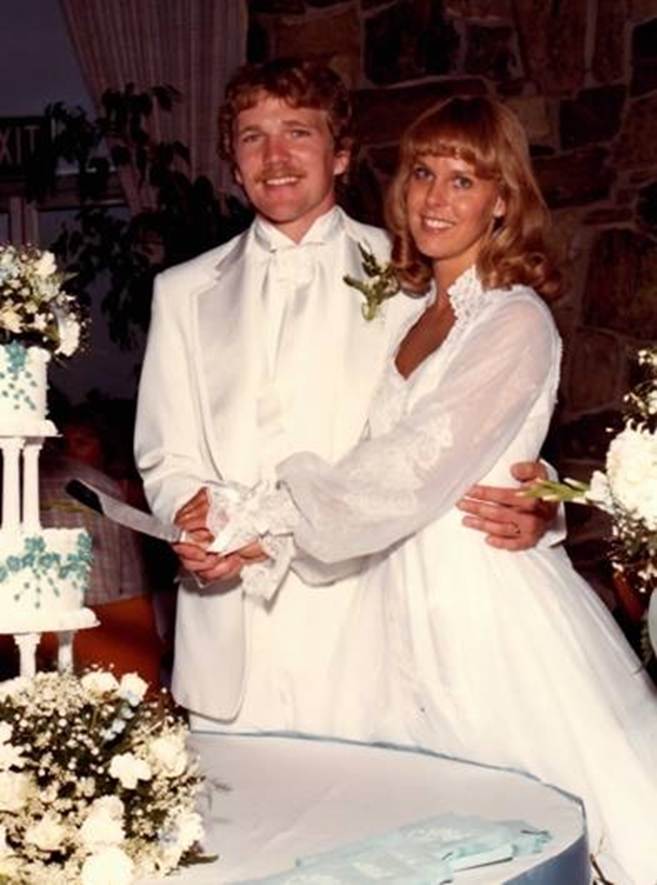
May 22, 1982
Choosing to Submit to Gravity
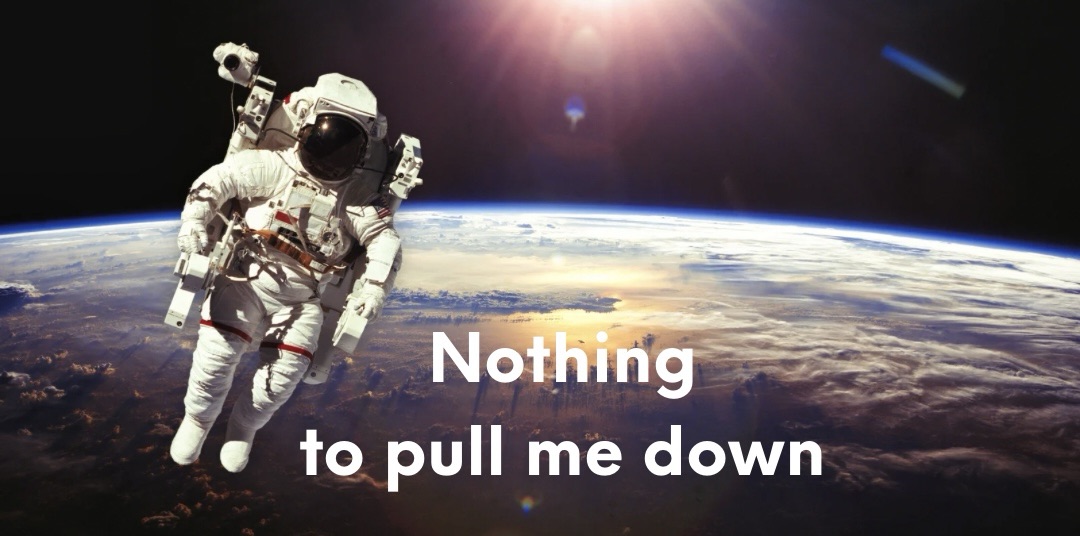
The Launch of Artemis II on April 1st caught my attention. I was a child when Apollo 11 landed on the moon the summer of 1969, and this most recent mission took me back to the wonder I first experienced thinking about space exploration. The Artemis mission was significant for how it is meant to be the first step towards establishing a permanent base on the moon. The astronauts traveled farther from earth than any human ever has before. From there, the plan is to prepare to send humans to Mars. The challenges that must be overcome are enormous.
Going back to my childhood fascination, I determined at age 8 that I was going to learn everything I could about space travel. That lasted for a couple of years. But the information I gathered stuck with me. The most delightful revelation was the weightlessness astronauts experience once they are outside the earth’s atmosphere. Floating! The sense of freedom! Never falling down! Nothing too heavy to pick up! This sounded so fun!
I Need Gravity
It wasn’t till years later that I learned of the negative effects of prolonged weightlessness, also called microgravity. Astronauts can lose their sense of orientation with their inner ear getting confused. Their bones lose density. Their hearts grow weaker as body fluids shift upwards. Fluid buildup in their eyes cause blurry and long-term problems with their vision. Their spines stretch out, causing back discomfort. And their muscles atrophy because they don’t have to work as hard. All these physical maladies are due to one thing: the absence of gravity.
The freedom of not having to submit to gravitational pull, while initially a delightful sensation, has its long-term cost. Another way of looking at it is that humans are meant to live under the, sometimes harsh, pull of this invisible force. We need gravity to thrive physically. The lack of it will be a major problem to overcome as the plans to go to Mars advance.
My conclusion: we need to push against heavy and uncomfortable forces for the sake of our health, and this is not just for the physical body. We need mental, emotional, and spiritual resistance training.
Read MoreChoosing to Let Myself Be Seen
Most of my life growing up, I felt misunderstood. I tried to relate to those around me by being who I thought they wanted me to be. But it felt like few, if any, ever saw the real me and said, “I like that person.” That took its toll, and I easily withdrew within myself. I became, at best, a private person. I longed for a friend that would accept me for who I was, yet neither did I ever allow the real me, with all my fears, insecurities, and sin to be seen. I built protective walls of shyness to keep the anticipated pain of rejection manageable and as far away as possible. But something within always ached for a connection with another that would provide a reason to open the door of my heart and truly be seen and known.
As a teen, I realized the name of the quality I hungered for was intimacy. Marriage, I then presumed, would satisfy this yearning. A sexual relationship, after all, is the epitome of closeness and connection. And though it initially seemed to do the trick, I eventually came to an unexpected realization: a person can be married, sleep in the same bed with someone and still feel lonely and disconnected at times.
A Universal Desire
I, like so many, have longed for intimacy in my relationships but have found it elusive. There are moments when it seems to be within my grasp, conversations or activities with a friend or with my wife where the bond feels almost other-worldly. It’s as if we can see into each other’s soul. Yet it doesn’t last, fading with distance and time. I want to believe, however, that those moments are glimpses of what can be mine continuously, forever. But how?
And then there’s my relationship with God.
I was a young adult when I was told that God desires an intimate relationship with me. It was initially a strange idea, but nevertheless intriguing. I was familiar with the Bible and the concept of serving God. I had memorized scripture as a child, and I knew a lot of information about God and His Son, Jesus. What poked at my mind was that there was possibly a level of connection with my Creator that I had not experienced. Could I be known by God as well as know Him in a way that went beyond merely accumulating theological data, doing good deeds, taking communion, and recounting biblical stories? What did having a relationship with God really mean?
Read MoreChoosing to Recall the Right Things
I forgot a friend’s name the other day. For a few moments I couldn’t recall that word that represents someone I care about. It should be so familiar to me. I felt ashamed. Fortunately, the lapse didn’t last long. But moments like these make me wonder if this means age is catching up with me. Or am I just not thinking about that person enough to keep his name fresh and alive in my memory?
Whatever the reason, forgetfulness is becoming more common. Besides people’s names, there are those book or movie titles that stay on the tip of my tongue, but I cannot bring them fully up from my memory. Jokes or stories I start to tell but then realize I can’t recall the details. It’s often a matter of focus. I can be intent on one subject while being asked about another and find it difficult to shift efficiently. Sometimes I can feel the memory I’m pursuing swirling away like a feather in a gust of wind. And the greater effort I put in to grab it, the more elusive it becomes. I don’t remember it always being this way. But maybe that’s just another memory problem.
Perhaps it is age, after all.
But I feel there can be some forgetfulness that has nothing to do with growing old. How often have I forgotten God, His power, His goodness, His mercy? Particularly when I was younger, all it took was a shortfall of money, a miserable sickness, an expectation not met, or a relational hurt. My focus would be on myself, my fears, my anger so much so that it felt as if everything God had promised or provided in the past never existed.
Yes, there is a forgetfulness that has nothing to do with age.
Read MoreChoosing What’s Already Been Decided
I have been an on and off fan of Star Trek (and its various versions) over the years. As a kid, the alien enemies scared me: Klingons with their cold, hard, and aggressive logic; the emotional paranoia of the Romulans; and the greed and cowardice of the Ferengi. All of them, I learned to laugh at as I grew older. But the one group that still sends a chill through me is the Borg. They are the race of beings that has incorporated technological enhancements with the physical body, turning themselves into a single living machine controlled with a common consciousness in the Queen Borg. They can live forever, and no one can really stop them.
Now we are seeing science fiction and present-day reality beginning to entwine. The 1999 film The Matrix presented what felt like the very unrealistic idea that machines could eventually dominate and enslave humans. Before that was The Terminator, again the machines taking on their own life and will. Beyond thrilling entertainment, such story telling gets us talking about questions I never heard my grandparents’ generation asking. What does it mean to be human? At what point does technology begin to dehumanize us? And even deeper, just because we can, does it mean we should? Where are the boundaries? And, should there be any limits put on human ambition to take control of our own existence?
Right now, ChatGPT (artificial intelligence) and all its technological cousins seem to be enhancing our lives. But the questions persist: where is it all taking us? Is it leading us to a better place? Are limits always bad? And where is God in all our human advancements?
A lot of questions!
Freedom from Physical Limits?
The term transhumanism is coming up a lot more in online discussions and the news. From what I understand, it is a broad topic under which artificial intelligence (AI) would fall. Its supporters, which I will refer to as transhumanists, are interested in using technology to extend human abilities and capacities, to go beyond biological limitations. They can see a future where humans will slow, reverse, or even eliminate the aging process. They imagine taking evolution to a whole new level by someday merging humans with machines, even getting to the place where a human’s consciousness can be uploaded onto a computer. This is the transhumanist’s idea of eternal life.
The desire to live forever and cheat death is not a new thing. Such a longing is found in writings as old as the Gilgamesh Epic, written around 2100BC. But whereas ponderings on eternal life have traditionally been rooted in spiritual pursuits, the transhumanists have brought it into the materialist’s realm – something we can attain through scientific advancements. They believe we humans can make ourselves eternal, all by ourselves, with our own genius and our own unwavering will.
Creating My Own Identity
The question that is being addressed is, what is a human? The answer the transhumanists (and many other groups) are giving is this: anything we want to be. It comes down to a single word: identity. More and more people are believing we each create our own selfhood, and there are no limits on what we can become.
Read MoreChoosing to Think Like a Child
As a child, I remember when my Sunday school knowledge about God and the Bible became too simple and dull. I was a jaded 12-year-old, having grown up saturated with what felt like dry, moralistic lessons drawn from the pages of scripture. The words faith, hope, love, sin, humility, heaven, the cross, and resurrection stirred yawns. I had heard it all a million times. Was there anything about this Christian stuff that was fresh and exciting? New information that could capture my imagination? As a young adolescent, I began to doubt that there was anything more about Jesus worth pursuing or knowing.
Fortunately, I encountered the real presence of Jesus through some fellow high school students who experienced radical transformation when they surrendered to God. These friends who had not had the same immersion in scripture and biblical teaching seemed to appreciate it so much more. This intrigued me. It wasn’t until I became an adult that I began to appreciate the biblical education I had been given as a child. And as I have grown older, I have returned to those boring words that were hammered into me during Sunday school. I now realize that they were at the core of all I really needed to know.
Read MoreChoosing to Believe GOOD is Coming!
Will this war ever end? And when it does, will circumstances in Iran, or in the world for that matter, be better?
Here at home there is so much division, anger, and fear for the future. I don’t see any politician being able to heal the divide that is growing ever wider.
And on top of it all, everything is getting so expensive! Will I be able to pay for my housing or afford to even eat in another year or two?
I feel depression knocking at my door, and I can’t see how it’s going to get any better.
“Hope” is a nice word for such a time we’re in now. But how does that word play out in this season of war, division, and uncertainty? How do we find real hope when most the news coming at us feels dark with no reliable light at the end of the tunnel?
What Does It Actually Mean?
An online dictionary defines hope as “the feeling that what is wanted can be had or that events will turn out for the best.” While this is how most people generally think of hope, I have a problem with this definition. It reduces hope to a mere feeling. And if I’ve learned anything about feelings, it’s that they’re unreliable and rarely stick around through every season. For such a time as this, I need something that works apart from my emotions and that I can rely on regardless what I’m feeling as I scan the news.
I prefer to understand hope as the belief that there is good in the future. Beliefs can be felt at times, but they aren’t dependent on feelings. To believe that there is something ahead that can give me a kind of goodness that will make my present pain and confusion melt away gives me strength to endure today. Hope is more than wishing for something to be true. It’s the confidence that the way things are now is not the way they’re going to remain.
Read More Choose This Day