
Choosing to Trust What I Cannot See
The well-known British philosopher and atheist, Bertrand Russell (1872-1970), was supposedly asked later in his life how he would explain his beliefs if he was confronted with God after he died. It is said that he quickly replied, “Not enough evidence, God! Not enough evidence.”
I have often wondered how much evidence would it take to convince him, or any atheist, of God’s existence. What kind of proof is necessary to satisfy anybody that there is a personal God? It seems to me that belief in a deity or some kind of spiritual reality is more a matter of human will than anything else. If I don’t want there to be a God (at least the kind of God I am imagining), then I am likely to find the means to explain away any “evidence” that might be presented. But, if I do desire a God (of any kind), I am more apt to have eyes to see all kinds of things and happenings as evidence pointing to the likelihood that there really is a spiritual Being and reality outside myself.
Faith (a choice of my will) makes the difference. I have to decide I am going to trust.
Read MoreChoosing My Filter

Don’t you hate it when you find grounds in your coffee? I am not a barista or even close to being a “coffee snob,” but I imagine there can be multiple reasons for such grit in my morning java. The most common reason I’ve been told, when using a plain ol’ drip coffee maker, is the wrong grind. Too coarse and perhaps you don’t experience the full flavor. Too fine (my tendency) and the water backs up and spills over into the pot, taking bean particles with it. Yuck.
A filter is supposed to take care of this problem. It is meant to hold back the stuff you don’t want and let through the stuff that makes the coffee worth drinking. But these strainers are for more than just hot beverages. Make sure you get new oil and air filters for the next round of maintenance on your car. Furnaces and air conditioners need them too. Don’t forget the water filter. They collect and hold back destructive and unhealthy particles from moving through and destroying your engine and your health. In addition, there is the metaphorical filter we all appreciate when people use it on their mouths. Most agree that not everything that comes through the mind should be spoken. A little self control, maybe?
The concept of filtering can be applied to so many things. But the results are not always positive. For various reasons, many of us also apply filters to our minds and beliefs that keep us from seeing, hearing, and experiencing life-giving ideas and truth. The good stuff can get filtered out too.
Read MoreChoosing What I am Passionate About

I had a professor in college who challenged all of us to be passionate . . . about anything. Throughout the semester he often said that it didn’t really matter what we were passionate about, just that we cared deeply enough about a cause, a line of work, or an area of study to give ourselves completely to it. Half-heartedness was our greatest enemy as we took steps into adulthood. I was moved and spent quite a bit of time afterwards pondering what I could care about so deeply to have it direct my life in the way that the teacher described. While I claimed to follow Jesus at the time, the idea of making God the focus of my passion did not come to mind for some reason. The professor had directed us to find a cause or activity to feel deeply about. And so, I tried a few things, like long-distance running, exploring new kinds of music, and even political projects and activities that benefited the poor.
It was not too long after this that I proposed to my girlfriend. Marriage and my passion for her and our life together became my focus. The other pursuits were pushed into the back seat, with some of them falling out of favor for good. Left to themselves, passions often don’t last long – definitely not forever. But I have often revisited some of those early ponderings and wondered whether it is true that it doesn’t matter what I am passionate about, or what I allow my deepest affections to go after. Passion is the goal, regardless what it’s focused on. But is EVERYTHING worth passionately committing to as long as I feel it deeply? Does simply choosing to give my affection to something automatically make it worthy of a passionate pursuit?
Read MoreChoosing to Accept an Unlikely Rescue

For as far back as I can remember, I have known the words to the old hymn: Amazing Grace. But the truly amazing thing is how long it has taken me to understand them. The lyrics were written by John Newton, an Anglican minister, on New Year’s Day 1773. They were part of a sermon he gave describing his conversion to Christ. He captained a slave ship in his younger years and almost died in a storm crossing the Atlantic in 1748. His tribute to the grace of God saving a wretch like himself was set to music a few years later. One of the most enduring hymns of all time then came into being.
In my mind, it was most meaningful for those “wretches” that had done unspeakably terrible things. I didn’t see myself as that bad.
Because of my self-righteous attitude, it was difficult for me to appreciate “grace.” To be honest, the word always felt a bit flimsy and fluffy. It seemed to be for those who couldn’t make mature decisions, who needed to have their hands held to get through the day. It didn’t fit my subconscious picture of personal strength and manliness (it was a girl’s name after all). And while I didn’t outright reject the idea, I did push it to the back of mind, never really examining it.
It’s Scandalous
I read a book as an adult called What’s So Amazing About Grace?. It shook me. In it, Philip Yancey unpacked the word “grace,” making a case that it is a very pleasant and, at the same time, a shocking and offensive concept. He pointed out that, like me, most people view grace as a nice soft religious word . . . until it is seriously proposed.
Read MoreChoosing Where I Put My Faith, Hope, and Love
The word “forever” can be interpreted differently depending on what a person wants. A couple reciting their marriage vows might intend the meaning to be “as long as I shall live” or “until things get too difficult.” A child who claims to have a BFF (best friend forever) could be wanting it to mean “until we part ways,” or “until the end of the school year,” or even “until I find a better friend.” That person who received a life sentence in prison likely chooses for it to mean “until a successful appeal can be made.”
The English language has so many words that can be used as synonyms for “forever.” Everlasting, perpetual, enduring, undying, unending, perennial, unceasing, always. And there are many more. It’s almost as if there is something hardwired inside us to expect, or to long, for things or situations that have no end, or at least to feel like they have no end. Yet, it is so hard for us mortals to grasp a mental picture of any thing, any situation, any relationship, or any being that could exist forever. We seem to be stuck in an in-between place, imagining and desiring something we cannot fully picture, hold on to, or even decide if we truly want.
It Will Have NO END
The Biblical word is “eternal.” As followers of Jesus, we have been promised eternal life (John 3:16). What does eternal, unending existence mean? Every once in awhile I realize how little I plan around the idea of living forever. I rarely think about possessing something that never ends and cannot be taken from me. But if I truly believe that endless life is my future, how should I think, respond, and choose differently in my everyday life today?
And horrors of horrors, what if those things to which I give all my time, energy, and thought in this life are the only things available to me in my eternal existence? What qualities, accomplishments, attitudes, or relationships that I presently possess do I want to live with forever? Which ones of them have any eternal value?
For a long time, I have been fascinated with the last verse of 1 Corinthians 13. Known by many as the “Love Chapter,” it provides a beautiful description of what love looks like. The last verse says: “And now these three remain: faith, hope and love. But the greatest of these is love” (1 Corinthians 13:13 NIV).
Read MoreChoosing a GUILTLESS New Year

The new year is upon us, and that means resolutions! Many of us are making promises to initiate changes in our lives. I have heard mixed reviews regarding the effectiveness of such commitments. Most of us give up on the pledges made on January 1st before the month is even over. Vows to lose weight, get in shape, spend more time with family, or stay off social media start out strong but lose steam as old habits reassert themselves. But there are pathways to success. Keep at it!
The past is often our enemy when it comes to making healthy changes for the future. Harmful habits can have deep roots. Patterns of failures and discouragement push their way to the forefront and work to derail our good intentions to change. How realistic is it to simply forget the past and move into a brighter tomorrow? If we are trying to do it with pure will power, the chances for success are not particularly good.
One of the most powerful phantoms of the past is guilt.
The weight of yesterday’s mistakes and sins does not just drop off our shoulders because we decide we want it to. It often is a burden that grows heavier. Or like stepping into quicksand, it sucks us lower and lower. It is a real force that keeps many from experiencing freedom and making positive changes for the future.
Read MoreChoosing to Adore Him
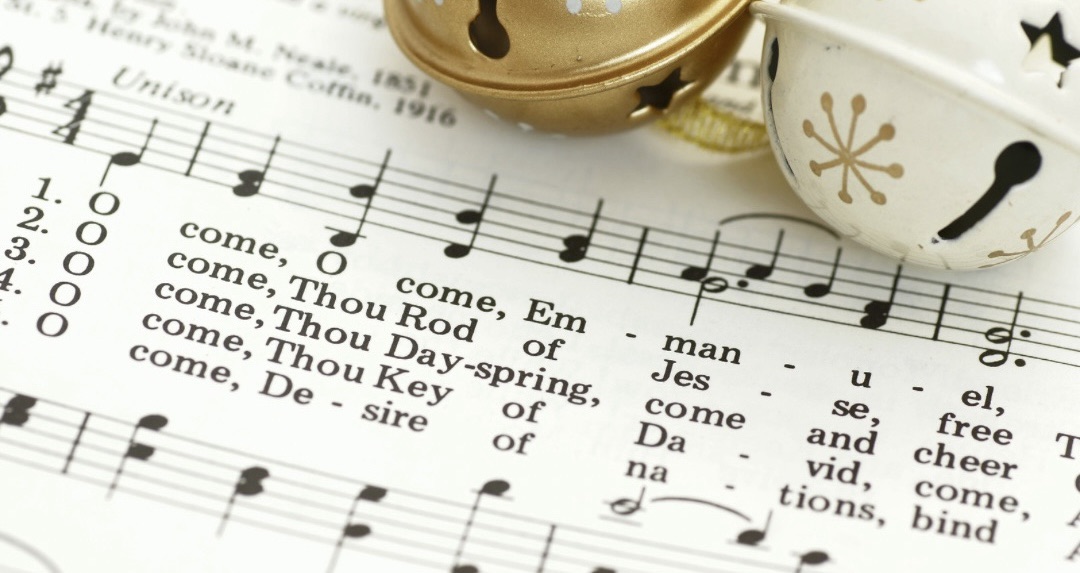
Christmas music! I love pretty much all of it. Both the sacred and secular songs stir something and pull me in. I find beauty (read last week’s post) in almost every melody. And while it is fun to “deck the halls,” “jingle bells,” and “walk in a winter wonderland,” the carols that offer a sacred hush and highlight the birth of a savior are by far the highlight and, for Jesus followers, cannot be replaced. But what am I declaring when I sing about a little town called Bethlehem, joy coming into the world, shepherds watching their sheep at night, listening to singing angels, and a night that is silent?
I must admit, for the longest time Christmas music merely created a pleasant atmosphere for me — a feel-good sound filling the house. I didn’t really comprehend the heart or significance of what was being proclaimed by choirs or carolers. I used to think of the sacred advent hymns as inviting us to come and look at baby Jesus as we would admire any cute, adorable newborn. It was somehow sweet that He was laid in a feeding trough and wrapped in swaddling cloths — though I never asked what swaddling meant until I was instructed to swaddle my grand-babies. For most of my early years, the songs were just a build up to the 25th of December when I would get presents.
Read MoreChoosing to See Holiday Beauty

As far back as I can remember, I looked forward to and savored each Christmas season. I mainly anticipated receiving presents as a child. And then it became associated with a break from schoolwork. For my adult years, I attribute much of the expectancy to watching my children and now my grandchildren gear up in the excitement. But also, as an adult I have explored what else it is that stirs my heart so deeply during this season. The presents are nice, but most of the time I struggle to think of any material gift I truly desire. The exhilaration of being out of school has dissipated as classwork is now far behind me. The anticipation, however, is still there. What makes it so enchanting?
Along with wondering what instills the Christmas season with such attraction, there is the more general question of what draws me to anything. What is stirred in my heart when I find myself choosing to give attention and time to just sitting and absorbing an intangible holiday “spirit” in the air? It has been a mystery. Yet this quality of attraction is becoming more and more clear.
I am attracted to the BEAUTY of it all!
That which I perceive to be beautiful will always get my attention. I cannot help but want to gaze upon or be close to that which stirs my heart. So, it is beauty that lures me to lights, manger scenes, decorated trees, and gift giving.
But why?
Read MoreChoosing to Stand

Many years ago I read a slim little book by a Chinese pastor known as Watchman Nee. It was a study of the Biblical book of Ephesians. It is called Sit, Walk, Stand, and I have referred to it many times since.
SIT
He points out that the first three chapters of Ephesians focus on what God has done for us through Jesus. We are told that God predestined us to be adopted by Himself through Jesus (Ephesians 1:5). That He’s given us the Holy Spirit as a guarantee of our future inheritance until we acquire possession of it (Ephesians 1:13-14). That we have been saved by grace through faith (Ephesians 2:8). That we are no longer strangers and aliens but members of God’s household (Ephesians 2:19). That Christ is ready to dwell in our hearts (Ephesians 3:17). And these are a mere fraction of what all is stated to be ours in the first three sections.
Pastor Nee calls these the SITTING chapters. All that God has done for us is laid out, and we simply have to learn to rest or SIT in what has been set into motion. There are really no commands or directions given to obey here. We are called to believe and trust — which of course is not always easy.
Read MoreChoosing Thanksgiving Year-Round
I have reposted this multiple times over the years before Thanksgiving. This year, I thought I would put it out there again after the holiday to remind us that gratitude is meant to be an everyday lifestyle.
***
I am afflicted with a condition that I understand many men have. I often cannot see what is right in front of my face. The can of soup I’m looking for in the pantry mysteriously disappears when I go to retrieve it. I am perplexed and frustrated. And then my wife steps in and produces it out of thin air. How is that possible? To my embarrassment, it isn’t a mere coincidence.
Somehow, she has the ability to see what is really there. I look, and if it is not where I imagined it should be, or if it is a different color or shape than I assumed, or not moving, I am afflicted with a curious blindness. Items in plain sight are cloaked. I experience this while searching for socks, medicine, keys, and books more often than I care to admit.
But I have come to see that it also is a condition that affects my soul.
Blind to What I Have
I am naturally programmed to focus my attention on what I can’t see—that is, what is not immediately in my grasp. My mind is alert to comparing my status, career, possessions, education, relationships, personal satisfaction, experiences to those around me. Often, however, I come out on the short end. What I have does not seem enough and I become agitated, restless, pessimistic. This blinds me. I don’t see what I do have. And sometimes I don’t even need to go as far as comparing myself to anyone; I am stuck seeing everything in my life and all around me that is wrong.
Read More Choose This Day