
Choosing More than Results

“Christianity doesn’t work.”
I’ve been told this more than once. Someone explains why he’s giving up his faith, and it usually has something to do with him not getting what he feels he needs. Typically, references are made to unanswered prayers; troubling questions without satisfactory answers; doctrines that don’t make sense; and of course, there is always that person or group of people who claim to be Christians and are jerks. He simply does not want to be associated with such ignorance or insensitivity anymore. His position is often summed up with a statement like, “Neither the world nor my life has improved because of Christianity. In fact, it’s made everything worse. So I’m moving on.”
So, what makes something workable and worth sticking with it? I don’t know if it’s a Western thing or just a human thing that leads so many in my culture to judge something or someone according to how everything turns out. It is my tendency. If I have an itchy scalp, the question for the new shampoo I’m purchasing is, does it take the itch away? If it doesn’t work it’s not meeting my felt need, and it’s not good for me. This is how I, and I’m sure most people, judge consumer products.
But is it the right way to look at all of life?
Happiness or Something Else?
There is an approach to ethics known as utilitarianism. Right and good actions are decided by what gives the highest sense of happiness, pleasure, or contentment to the greatest number of people. From this way of thinking come phrases like, “whatever makes you happy;” or, “the end justifies the means;” or, to use something my grandmother would have said, “the proof is in the pudding.” It’s all about a desirable product, problems being solved, pain eradicated, everyone happy and feeling better. If, on the other hand, the results of an event or a choice or a relationship is pain, confusion, loss of resources, tension, or widespread dissatisfaction, then it’s natural to call the triggering event “bad.” And if my system of doing things (i.e., my faith) cannot fix it, heal it, or take it away then it’s useless and should be discarded.
Another way of identifying goodness can be framed by the question, “what does the process provide?” This question opens the door to other questions that can help us look a little deeper beneath the “helpful/not helpful” dichotomy. “What can we learn from this?” or “Is there something more valuable here than my getting what I want?”
Read MoreChoosing to Accept Restrictions
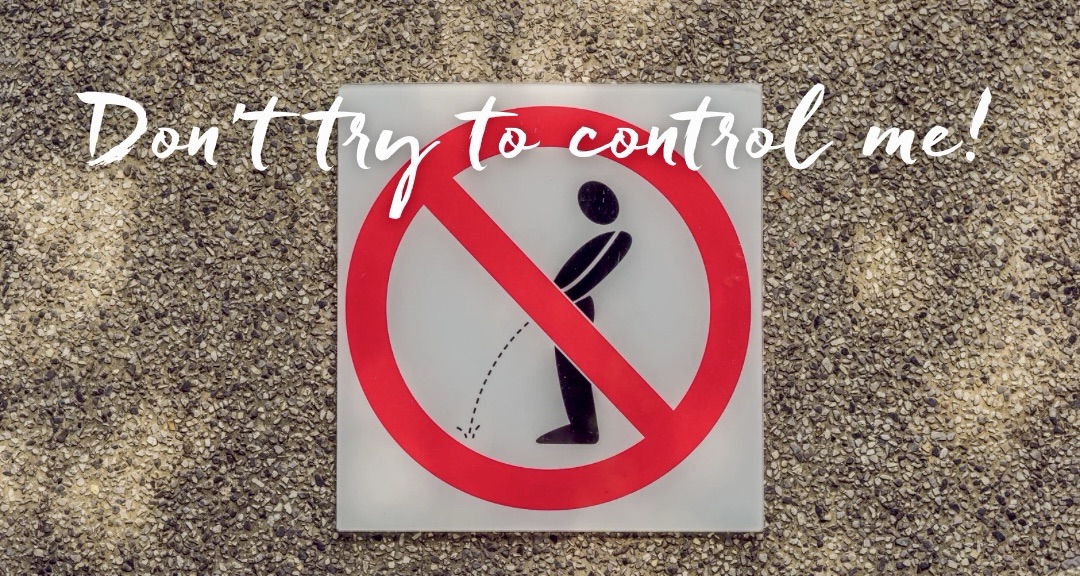
Often, the secret to success with any endeavor is learning the basics of a needed task. Trust the tried-and-true process. I believe this can apply to almost any skill. I remember my dad teaching me to wash a car: always start at the top and work down. That basic idea seems to work well for almost any type of cleaning.
Learning to drive a car at age 16, I thought I was a pro within the first couple days. Practicing regulating my speed and judging braking distance felt too basic after my first week behind the wheel. I was itching for “Indy 500” experiences. However, after nearly running off the road while taking corners, almost rear-ending cars in front of me, and having a head-on collision on a dirt road, I finally adjusted my thinking. Maybe I should master the fundamentals before testing how fast I could drive.
Another example was learning to write. My teachers provided the parameters and rules of composition. Correct spelling, no run-on sentences, organized paragraphs, proper punctuation, etc. But it all felt so restricting. I had story ideas and deep thoughts that needed to get on a page. My teachers, however, were turning papers back to me with big red question marks next to most the paragraphs. Were they just too slow-witted to recognize brilliance? After a while, it hit me that I needed to learn to write more clearly. And that meant, among other things, applying the rules they were talking about. My ability to express myself grew as I took their directions seriously and submitted to instructions.
The Disgusting Word
Living within restrictions or boundaries feel unpleasant to most. We look for ways to get around them. It is a growing part of our culture to perceive restraints – particularly restrictions that limit self-expression or the maximizing of personal pleasure – as wrong, and even, evil. And thus, the word “obey” can send waves of disgust, fear, and instant rebellion through many. Yet, learning to work within rules and instructions are so often the key to success and satisfaction.
Read MoreChoosing to Grow Up, Really

It’s a somewhat solemn day of reflection for me. It’s my birthday, and I’m getting old. At least that’s the feeling. I’ve been asking myself for a while if I have found any advantages in getting older, besides cheaper meals at Perkin’s Restaurant. It depends on the day.
I remember my grandfather saying to me multiple times when I was a boy, “Jeff, don’t ever grow old.” This bit of advice was given as he groaned and struggled to get himself out of a chair. Even as a child, I wondered what the options were. Did I have a choice? Aging didn’t and still doesn’t seem to get much positive press. Using the word “old” has become a guaranteed way to insult those with lines around their eyes or gray trimming their temples. Unless you’re a bottle of wine, it’s typically the last thing you want to be called.
“Mature” is now a nice euphemism that doesn’t sound so harsh. But this can be a bit confusing. To be a mature adult can mean a lot of different things. I recently ran across a list of five aspects of maturity:
- Physical: age, size, hand-eye coordination
- Emotional: patience, kindness, ability to manage anger
- Ethical: development of morals, ability to be empathetic
- Intellectual: school smarts, on-target learning for one’s age
- Social: ability to develop friendships, to share, and to cooperate
So, if I’m called a mature man (using the euphemistic term for aging), does that mean I have developed fully in most or all of these five ways? I think almost everyone would agree that the answer is a resounding NO. A long life does not necessarily equal full development of any of these aspects except for maybe the physical part. According to a saying I heard years ago, “Youth is fleeting, but immaturity can last a lifetime.”
Read MoreChoosing to Believe My Father Loves Me

I vividly remember the moment I became a dad. My daughter was a tiny thing, just over five pounds. Holding her, I couldn’t comprehend the strange feelings pulsing inside me. As I looked into her little face, I thought, “I don’t even know you, yet I’m sure I would die for you.”
That was my introduction to the emotions of being a father. I was surprised with the overwhelming affection I felt for this naked, helpless, yet demanding creature. It wasn’t long before another thought rocked my reality. If I, an imperfect human dad, can feel this strongly about my child, then what does my Heavenly Father feel toward me? The thought brought tears. Can I be loved with such strong affection by a holy, all-powerful God? And just as I was getting lost in these reflections, something warm ran down my arm. My precious little girl had peed on me. But did that change how I felt about her? Not in the slightest!
Read MoreChoosing to STOP and LISTEN

As I pulled up to the stop light in a Dallas suburb, I mumbled under my breath, “Right, left or straight?” The word “right” lingered in my mind, so I made the turn. My knuckles were white clinging to the steering wheel, and every muscle in my body felt like tightly wound guitar strings. As I rounded the corner, a row of yellow buses were parked ahead. An incredulous sigh of relief burst from my lungs.
I had been distracted and failed to get directions to my 13-year-old daughter’s volleyball tournament in Dallas. Our family was at a hotel in the city for a week-long conference. I had the task of picking Natalie up after her last game so that she could join the rest of us at the hotel. Her coach had agreed that I should come get her just before the team drove back to our hometown of Lindale, nearly 100 miles away. Family cell phones were yet a thing of the future. I had no way of calling to get directions or inform her that she should just ride back with her team and stay with a friend till our conference ended. My little girl was going to be left on a Dallas street corner with evening coming on! It was my fault, and I was desperate.
And then an absurd thought: “You believe that God speaks? Ask Him to guide you to the tournament site.”
With the sun getting low, I didn’t debate the idea long. I pulled out of the hotel parking lot, repeating my four-word prayer at every intersection, trying to keep all the rational questions at bay. And then after about 20 minutes, I saw her standing beside one of the tournament school buses. I was dumbfounded. It had really worked!
God, the Communicator
It was a long time before I shared this experience with anybody, mainly because I felt like such a bad father having forgotten to get the directions. But it was a profound reminder of what the Bible reveals—that God cares, He speaks, and He wants us to hear and respond (1 Samuel 3:1-11; John 10:2-5). And it’s not hard to imagine that He has even more to say than merely providing driving directions.
Read MoreChoosing to Recognize My Adulterous Heart

The first time I remember contemplating the word “adultery,” I wondered why it was called that. My conclusion, as a child, was that it was a word to describe the many things that adults do. Though I did not understand it, at the time, this homemade etymological explanation made sense to me. The world of adults was still mysterious. It wasn’t till I was a teen that the more specific meaning became clear. The word “adultery” was then replaced with a more contemporary term, “having an affair.”
But opportunities to ponder expressions of the word did not go away. Movies and stories referred to it. I eventually heard of colleagues and friends having extra-marital affairs, occasionally calling it adultery. But my understanding of the meaning had to be expanded when I ran across something Jesus said to those following Him:
“Then some of the scribes and Pharisees answered him, saying, ‘Teacher, we wish to see a sign from you.’ But he answered them, ‘An evil and adulterous generation seeks for a sign, but no sign will be given to it except the sign of the prophet Jonah’” (Matthew 12:38-39 ESV).
How could an entire generation of people be adulterous?
Recently, I returned to wrestling with this question. The word, used as an adjective in this verse, doesn’t seem to refer to sexual unfaithfulness. So, what is behind it?
Lots of Affairs
A quick Google search reveals that unfaithfulness in marriages and cohabitating relationships is quite common. There is no single consistent number given, but I saw 25% mentioned several times. That’s a quarter of all “committed” unions experiencing some kind of sexual/emotional unfaithfulness, often more than once. And these numbers come from the ones who have admitted it. Surely there are many who never confess. Of this number, males have a higher rate of occurrence by quite a bit. But the female number is growing.
What leads someone to have an extra-marital affair, to commit adultery (as the Bible calls it)?
Read MoreChoosing to Go Slow
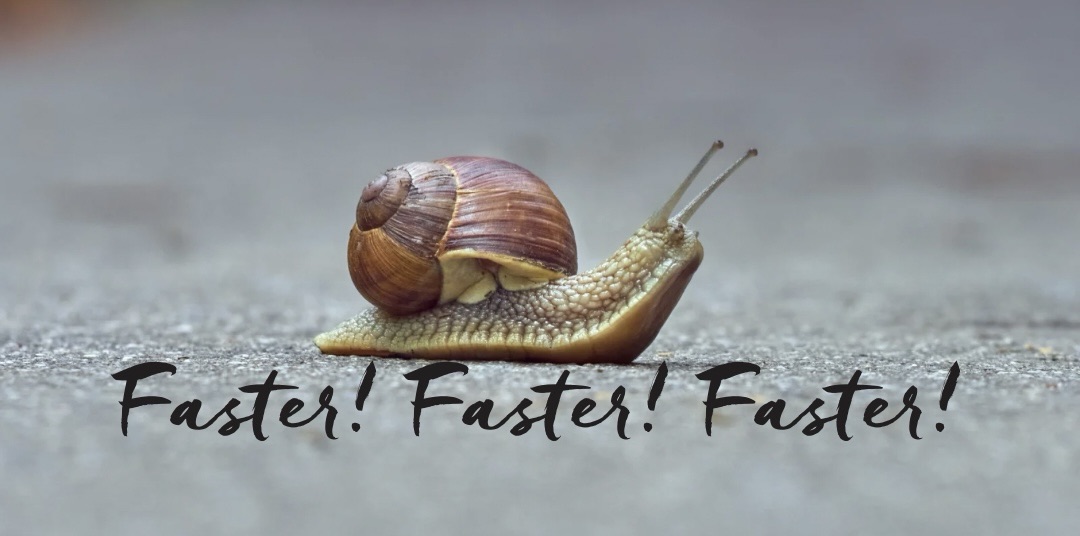
There’s something gratifying about finding a way to make a long journey shorter. I look to my GPS for help these days. But even as a kid, I was always looking for a short cut. When I was 12, my friends showed me a quicker way to the store where we could buy candy. It happened to go through a stranger’s backyard and across his patio. I used it many times until an angry man stuck his head out a window and yelled at me, threatening to call the cops. Shortcuts may get me where I want to be sooner, but they can create unforeseen problems as well. Looking for the quicker and easier way becomes a mindset and habit that infects all my decision making.
The temptation to reach goals faster, cut corners or bypass steps in a process shows up everywhere. Businesses consider it by offering lower-quality products. Builders face it when trying to increase profit margins. Students have to make a choice when they discover a way to cheat on a test and get the ‘A’ with no studying. I fall into it when I’m assembling IKEA furniture and don’t want to take time to read the instructions. Shortcuts offer a more direct path to a goal and the feeling that I have escaped unnecessary suffering or drudgery. But at what hidden cost?
Read MoreChoosing to Empty Myself

It’s a simple but often maligned and misunderstood word. To be considered humble is a compliment for some and an insult for others. It’s frequently associated with being soft spoken, self-deprecating, and wallowing in low self-esteem. While many people consider it a virtue of some kind, few of us are out there actively seeking to increase our humility. We intuitively know that something about the process is not going to feel good. And if someone recognizes that more humility is needed and wants to obtain it, it’s a rare person that has any idea of how to go about increasing it.
One of the reasons more people don’t seek it is that they don’t really know exactly what it is. So many of us look to certain feelings within to assure ourselves that we have the virtues we think are important. Yet the virtues of the Christian faith are much more about choosing than feeling. I have often invited students in my classes to stand up and be humble for a few moments. The clever ones will respond by saying that if they stand while everyone else is sitting, then they’re lifting themselves above the others and therefore not humble. But most of them just scratch their heads in puzzlement. Even if it is a feeling, how can a person create it at will?
How does one choose to be humble?
Read MoreChoosing Liberty

“Being able to do whatever I want to do.” That’s how a young man at the mall replied to my friend who was randomly asking strangers to define “freedom.” Many of the other responses that day were similar. Later, after hearing all the homemade definitions, it struck me that I wasn’t sure I had in my head a clear explanation of this word we throw around so often. We Americans have traditionally prided ourselves in living in the “Land of the free.” So, what does that mean? And of course, it’s also an important word for Jesus followers. We’re told that “For freedom Christ has set us free” (Galatians 5:1, ESV).
An online dictionary defines freedom as “the power or right to act, speak, or think as one wants without hindrance or restraint.” This sounds good for me personally. But when I think about others having this same ability, particularly those with below-average character, those with dark intentions, and those who just don’t like me, I’m uncomfortable. I want restraints put in place. I don’t want others doing whatever they want without hindrance because I don’t trust everyone’s heart motivations. Nor am I confident in everyone’s ability to think through all the long-term consequences of doing whatever they feel like. And thankfully, there are some restraints, such as social expectations and laws.
Freedom is a strange thing. That which I passionately protect for myself, I reluctantly release to others. After all, if freedom is not understood or used rightly, it’s dangerous.
Read MoreChoosing Painful Love

I read of her in my college literature class, Lady Elaine of Astolat. A figure in Arthurian legend, she died from the weight of unrequited love. Sir Lancelot just didn’t feel it the same way she did.
Of course, dying because of or for the sake of love is a theme that has popped up in stories for a while now. Think Romeo and Juliet as well as Jack in Titanic. There are stories in the news. In the midst of the sad and painful occurrences of school shootings, like the one in Minneapolis last week, inevitably we hear of those who shield others with their own bodies, ready to take a bullet for someone else. It is viewed as a heroic act of love and is honored. Why does the combination of love and death strike such deep chords in most people?
Suffering, Death . . . and Love
Much of our culture’s talk about love centers on sublime feelings or “good vibes.” How do I know I love someone? I experience a thrill or a warmth inside. That person always agrees with me. I want to be around that person all the time. I believe I will be happier and more fulfilled because I have that person in my life. I just feel better when I’m around that person.
So often, the focus of love is on me and how the other person makes me feel! Weaving our idea of love with death seems odd for ordinary circumstances. It’s no surprise then that phrases from traditional wedding vows are being dropped. How often do we now hear, “Till death do us part”?
It’s common in our culture that when the relationship’s euphoria or happiness wanes, we start wondering if we still love the other person. The doubts are especially strong when the other becomes a burden, slows me down, keeps me from fulfilling my dreams. The idea of dying (or being inconvenienced) on behalf of someone who irritates me, who doesn’t hold to what I value, or for whom I have no feelings seems absurd, and for some, even wrong.
What is love supposed to look like?
Read More Choose This Day