
Choosing Economic Transformation
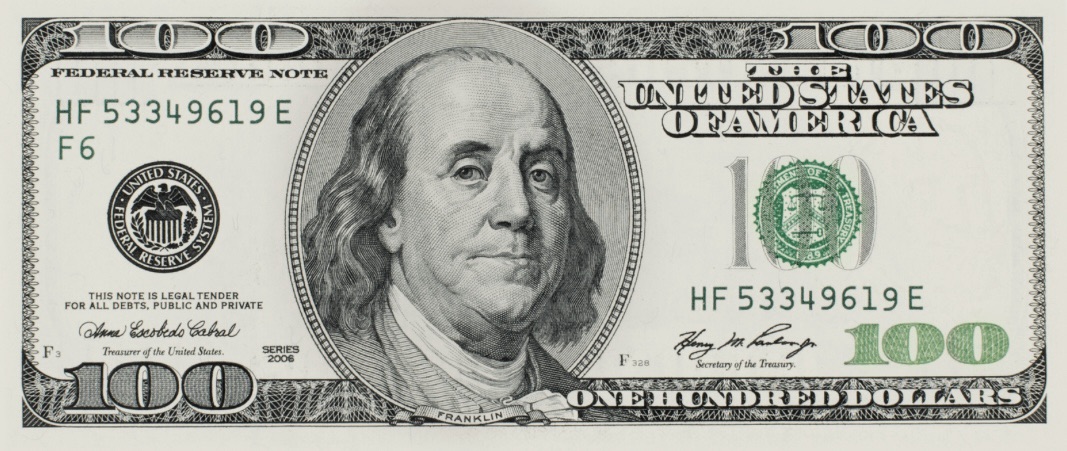
Several years ago, I had a long layover at an Australian airport. While waiting in line to pay for a snack, the man in front of me haggled with the cashier over his purchase. He wanted to use Bitcoin to buy a candy bar. The woman ringing up the sale stated multiple times that they didn’t accept such currency. The man, for his part, went on to give a lengthy lecture on the need for them and everyone to get with the times because cryptocurrency is the future. Besides being irritated by the delay he caused, I remember thinking how foolish and out of touch the man sounded. In my limited understanding at the time, cyber money was in the same category as Monopoly money – worthless for any practical purpose.
Of course, I was wrong.
I don’t know a whole lot more today than I did back then. But I do now believe that it’s unlikely that cryptocurrency is going away. It stirs controversy and polarizes investors because it is challenging the way we understand money. And at an even more fundamental level, it is calling out how value is determined. Rather than continuing to accept the traditional system where governments and financial institutions largely control currency, crypto investors are betting on the expanding appeal of a decentralized scheme where no single person or group can manipulate value. It’s sounding more interesting even if it still seems a bit strange.
What makes something valuable?
Where value comes from is a question to ponder. Cryptocurrency and NFT’s (non-fungible tokens) after all are digital. There is nothing to hold in your hand unless you cash-in through a broker of some kind. A market for NFT artwork developed back in 2021. Unique digital NFT collectibles (Google “Bored Apes”) were being sold for thousands and even millions of dollars* (although prices have since fallen significantly, I’m sure there is something that has or will take its place). Cyber stuff now attracts investors in the same way an original Van Gogh or Rembrandt does. It’s not the material itself that holds intrinsic worth but what it represents: beauty, status, distinction, freedom, decentralization, or even just being recognized as an early adaptor.
Value is determined by what people are willing to pay for any given item, service, or recognition. Though the dollar amount may fluctuate with the needs, interests, and moods of people, value itself is a very real entity, even if it is mysteriously intangible, fluctuating in strange ways. It can cause the price of a baseball to shift from $8.99 to $752,467.20 in just a few seconds because a certain person hit it over a fence.**
Read MoreChoosing to Trust Again

What is it about children and their selective hearing? They conveniently fail to perceive instructions or warnings they don’t like. But if a parent for some reason does not follow through with something he said he might do, there is a predictable mantra shouted:
“But you promised!”
And it’s that word “promised” that carries the punch. They never say, “You mentioned . . .” or “suggested” or “implied.” They use the most powerful word they know, making it synonymous with a vow, a pledge, a commitment, or a blood oath. It’s all to impose guilt on the parent, of course, as if he is committing a mortal sin (and perhaps he is) by not fulfilling what the child expected. And yet we adults are not much different in how we use that word.
Trust Issues
A promise is the assurance given that something is going to happen. And as we get older, it’s typical for us to become cynical about any kind of verbal guarantee. When broken promises become more common than those that are fulfilled in our lives, we lower our expectations. Words become more meaningless. Written contracts become more necessary. Promises made in relationships, politics, and religion become more doubtful.
And we eventually scoff and sneer at the idea that any person can be counted on to keep a promise. The crux of the issue is always the question surrounding the character and reliability of that “person” making the promise. Is there anyone who is worthy of such trust?
Read MoreChoosing to Let My Shame Be Covered

It happened one day on the school playground when I was in 5th grade. A girl who I thought was my friend suddenly called me a “blockhead.” As all the surrounding kids laughed, she went on shouting that my head was too big for my body. Her tone and the unwanted attention were mortifying. I had no idea why she was saying this or even what exactly she meant by it. But rather than seeing it for what it was, foolish talk of a child, I searched for an explanation in my own immature understanding of myself.
It had been pointed out that I spent a lot of time in the school library, even during recess, reading books. I had been called weird a few times for this activity. The playground incident, however, sealed the verdict that there was something wrong with me, and I needed to change that something. So, I decided to pursue sports. Baseball, basketball, and soccer all went poorly. In high school I did well with football, receiving praise. Yet the sad truth was that I didn’t enjoy any sports that much. I just needed to feel I was OK, and being an athlete provided that covering for a brief time. I now realize I was dealing with my own brand of shame.
Read MoreChoosing Something Other than Happiness

I like to feel good. It’s a basic urge within me to chase happiness wherever I think it can be found. My country’s Declaration of Independence affirms the pursuit of it to be an inalienable right. When I imagine myself in a happy state, I see a hammock swaying between two Ponderosa pine trees overlooking a secluded mountain lake as the sun gently warms my face. There’s a good book lying open on my chest and a bowl of ice cream in one hand. Of course, to complete the scene, I just inherited a million dollars, and everyone likes me.
Oh, and there is world peace.
This may not be your picture of happiness, but it’s the first one that comes to my mind. The problem, however, is that there are too many circumstantial pieces outside my control. I may find the actual setting in some mountainous region, but it could also be raining that day. I might then discover the hammock has a rip in it; the book is boring; the ice cream is freezer-burnt; an email concerning an overdrawn checking account is in my inbox, and someone has left an angry rant on one of my blog posts. And what chance is there of all fighting to stop? Ugh.
Happiness can be so elusive.
Read MoreChoosing a FOREVER Life

It hit the airwaves just before I graduated from high school. And though I never absorbed any of the lyrics except the first line, I found myself humming and singing those few words over and over. There was also a movie and TV series that showcased the song.
“Fame! I want to live forever!”
Irene Cara belted it out so effectively at the top of the charts that I didn’t have to see any of the shows to remember it. Afterall, who doesn’t want to be famous, and who doesn’t want to live forever?
Well, it turns out that there are those who don’t want the pressures of fame. Ask celebrities who cannot go out in public without being harassed. And concerning living forever? it depends on who you ask.
What’s so great about a long life?
I recently read a post by a self-proclaimed Gen Z atheist. He was poking fun at how long the Bible claims pre-flood people lived. Methuselah has the biblical record of 969 years. “I’m already bored with this world,” he wrote. “Can you imagine living hundreds of years without the internet or any technology? No thank you.”
While there is much that could be said about this young man’s stereotypical Gen Z dependence on technology to get through any given day, it’s his view of the burdens of a long life that interests me here. It sounds like he might disagree with the song Fame. Living forever without technical support for entertainment sounds miserable, even cruel. If living hundreds of years is intolerable, what would it be like to be immortal?
Read MoreChoosing to Step Back and Wait

I always saw myself as a laid-back, easy-going person. That was until my first year of teaching remedial English to 8th graders in a California inner-city school. My carefully composed lesson plans were sabotaged daily by 13 and 14 year olds who derived perverse pleasure from watching my frustration grow. I would come home each afternoon exhausted and dreading the next day. A few years later, after I had transitioned out of teaching public school and into working with Youth With A Mission, God had to deal with my heart. He revealed to me that I was holding onto hatred for some of those kids. And to be truly free of the torment I still carried, I had to forgive each of them by name and pray blessings on them. It was not a fun process, but it was necessary. And out of it I grew to understand more of how God wants His Holy Spirit to work in my life. I am to take on more of His characteristics.
We are told in Galatians 5:22-23 that there are certain God-given qualities called the Fruit of the Spirit: love, joy, peace, patience, kindness, goodness, gentleness, faithfulness, and self-control. I have talked about love* and Joy** in past posts and will soon post one on peace. But the quality that I have been pondering lately is that of patience. An older name for it is long-suffering, which always sends uncomfortable chills down my spine when I say it. Is it really necessary?
Read MoreChoosing What I REALLY Want

I first smoked a cigar in college. Somehow, I had managed to avoid all tobacco before that. When I joined several other film students in a project to tell a story set during a poker game, we decided our set needed to be filled with smoke. Of course, there were other ways to produce that image without actually smoking multiple cigars (I see that now). But in our youthful wisdom, lighting up and puffing on multiple stogies was “obviously” the best way. Unfortunately for me, I sought no outside guidance on whether this was a good idea nor on how to go about smoking my first few wads of rolled tobacco leaves. By the end of filming, I was not feeling well. I also could not recall why I had been so eager to do this. And in case you’re wondering, the film turned out to be an embarrassment. We put more thought into filling our room with smoke than the actual story we chose to tell.
I look back and still wonder why I was so excited to light up that first time. The best answer I can come up with is that I wasn’t in touch with my real desires. Though I had refrained from tobacco throughout my high school years, the image of a real man sitting in a high-backed chair casually blowing smoke rings massaged a deep longing. Descriptors like “mature,” “confident,” “respectable,” “cool” pressed into my mind. The film class provided an opportunity to become that image. Or so I thought. The occasion, in reality, gave me none of what I expected. In fact, at the end of the day, I felt like an impotent child who couldn’t handle any adult stuff. I was nothing close to the coveted image of a suave and urbane man of the world. The experience left enough of a negative impression that I never touched tobacco again. My core longings had not been addressed at all.
Desires often are moving targets. That which I am so sure I want at a certain point in my life can later have little to no appeal. What changes? I don’t think the actual desires shift. But, what I imagine will satisfy that deep yearning can jump all over the place. Smoking a cigar was not what I truly wanted. I had convinced myself, however, that it was going to give me what I longed for, at least for that season of my life.
Read MoreChoosing the Process Over the Product

I loved to do pencil drawings when I was a kid. I received so much affirmation from my sketches that I decided at an early age that I should learn to paint and become a professional artist. But the problem was that for every drawing or painting I completed, there were 10 I abandoned part-way through. They just never looked right. I became unsure of my ambition to attend art school once I realized that I couldn’t distinguish certain shades of color. My younger brother burst into hysterics one day over a self-portrait that I considered perfect. He pointed out through howls of laughter that I had painted myself green. That ended my dream and at the same time assured me that I could not trust my own perceptions and abilities.
I realize now that my idea of a perfect drawing or painting was so narrow that I could never fulfill it. In my belief system at the time, there were only two ways to create a picture, the right way, and the wrong way. Unfortunately, my understanding of art wasn’t mature enough to question any unarticulated definitions of right and wrong. And so, my old sketchbooks are littered with abandoned and incomplete drawings. I’ve often wondered what could have been if I had learned to relax, appreciate the process, and creatively discover something new rather than fixating on a specific end product and the fear of not reaching it.
Avoiding Failure
What is it that lures people into the perfectionistic trap? I’m sure there are many answers to such a question, depending on the specific task at hand. Some might say they just want what they do to be the best it can be. Others link their personal value to achieving specific goals. What they accomplish, however, rarely matches what they believe ought to be.
For me, perfectionism has always manifested when I narrow down success at a task to a razor-thin definition. If I don’t see how my expectation can be attained, I usually stop trying. And when it comes to making decisions, my greatest concern is to avoid making the wrong one. Therefore, I tend to procrastinate. Putting off a conclusion as long as possible feels like a better options than failure.
Read MoreChoosing to Avoid Avarice

A good story almost always requires a villain. Everyone loves to detest and blame that guy who is despicable. And what is easier to despise than a creep motivated by pure greed?
In movies, a hero commonly struggles against a filthy rich tycoon or corporation seeking to add to their already-huge pile of money. The greed of the wealthy is a motif routinely used in Hollywood and politics because of its almost-universal capacity to stir up deep emotional responses—usually animosity. It’s a theme that has struck a chord in every generation. Afterall, it is so satisfying to see such evil motivations and actions exposed and justly punished!
But is greed a sin exclusive to the 1%?
It’s defined in one dictionary as “excessive desire for wealth or possessions.” Notice, it does not say it is the desire only of those who already have more than they need. “Excessive desire” can take root in the heart of any person. And that’s why it is counted as one of the Seven Deadly Sins.* Greed is an equal-opportunity vice which begets many other transgressions (such as cheating, lying, stealing, abusing others, avoiding paying debts, and even homicide) in those who let it dominate them—be they rich or be they poor.
Read MoreChoosing Strange Strength
My desire as a boy was to be strong. Being verbally and physically picked on in elementary school, I became fascinated with the idea of becoming powerful. The longing to prove my strength led to a few fights and endless daydreaming of what that day would feel like when I could show the bullies what I had inside me.
And there were also the models of “manliness” I was exposed to. Athletic coaches were the most influential. They taught me that to get ahead in sports and in the world, I needed to push harder and do whatever necessary to be better than the person in front of me. Success would come to those who could overpower the next guy. My cumulative adolescent understanding was that strength was proportional to aggression and determination to subdue anyone who stood in my way.
But my feelings of weakness always seemed to be the most powerful things within me. And as a result, I never could sustain any personal campaign of dominance or viewing myself as a conqueror.
And then there was Jesus. I was trained to look to Him as my example, praying to surrender my life to Him when I was a boy. But as I read the Bible stories, I couldn’t escape the feeling that He, as my model, was just as weak as me. Pretty disheartening for a kid trying to figure out the secret of vanquishing abusers and proving to everyone, especially myself, that I was not weak. Jesus, after all, let Himself be bullied, taught that His followers should “turn the other cheek” when attacked, and eventually gave Himself up to be killed on a cross.
What hope was there for me?
Read More Choose This Day