
Choosing a Divine Family

I was attending college in Southern California when I had my first discussion with a Muslim about the nature of God. He was from Iran, highly intelligent and very polite. After listening to my stumbling words trying to explain the Holy Trinity, using my Sunday-school knowledge, he asked a one-word question: “Why?” I had learned the quaint analogy of the Trinity being like the three components of shell, yoke and white making one egg. There was also the one compound of water expressed in its three forms of liquid, steam, and ice. But no one had ever explained to me WHY the Trinity was important for my understanding of God. Was it? Or did it merely operate as a theoretical abstraction that needlessly divided people? I was speechless. My friend smiled but was kind and let the matter drop.
Several years later as my relationship with God was deepening, I came back to this topic. Besides Muslims, I had since bumped into Unitarians and Jehovah’s Witnesses who ridiculed the absurdity of worshiping “three gods.” It was intellectually embarrassing. Was this Christian doctrine necessary for my faith? It certainly wasn’t convenient for my logic. I needed to explore it in earnest.
Why Trinity?
The first thing I realized was that the word “Trinity” is not in the Bible. It was coined by early Christians to describe a head-scratching phenomenon that careful study of the biblical documents revealed. Not only were there passages that stated there is only one God (Deuteronomy 4:32, Mark 12:29), there were passages where Heavenly Father was referred to as God (Isaiah 64:8, Galatians 1:1, Ephesians 4:4-6), passages where Jesus was referred to as God (John 10:30, Philippians 2:5-6, Colossians 1:15-17), and passages where the Holy Spirit was referred to as God (Acts 5:3-4, Ephesians 4:30, 2 Corinthians 3:17). How could this be? Some might have thought these were just the result of unreliable manuscripts. But others understood that an important aspect of God’s nature was being disclosed. They took the word for “three” (tri) and the word for “unity” and squeezed them together to form a description that in English is known as Trinity (Tri-unity)—three united as one.
There were a lot of people that didn’t like this understanding of the divine; it didn’t make sense to them. One guy in particular named Arius (Google him) led an opposition movement. He explained that Jesus was not an eternal being of the same divine substance as God the Father who had no beginning. Instead, Jesus must have been God’s very first creation—a powerful but limited, angelic-like being. This idea was easier on many people’s brains and Arianism gained a large following.
Another guy named Athanasius (Google him too) became the outspoken challenger to the teachings of Arius. Besides pointing out the scriptures that reference Jesus as God, Athanasius was concerned about our whole understanding of salvation. He wondered, if Jesus Himself was not fully God, what good did His death do in saving us from our sin? By stripping Jesus of divinity, Athanasius understood that our redemption would be empty and meaningless because only God Himself is holy enough to atone for all the sin of humankind.
In the end, the relentless determination of Athanasius won out, and the Western, Eastern and Coptic Churches rejected Arianism and embraced a purely Trinitarian understanding of God. The Father, the Son, and the Holy Spirit all have no beginning, no end, and work together so perfectly that they are rightly referred to as One.
And yet, I wasn’t satisfied.
Read MoreChoosing to Fight Fear
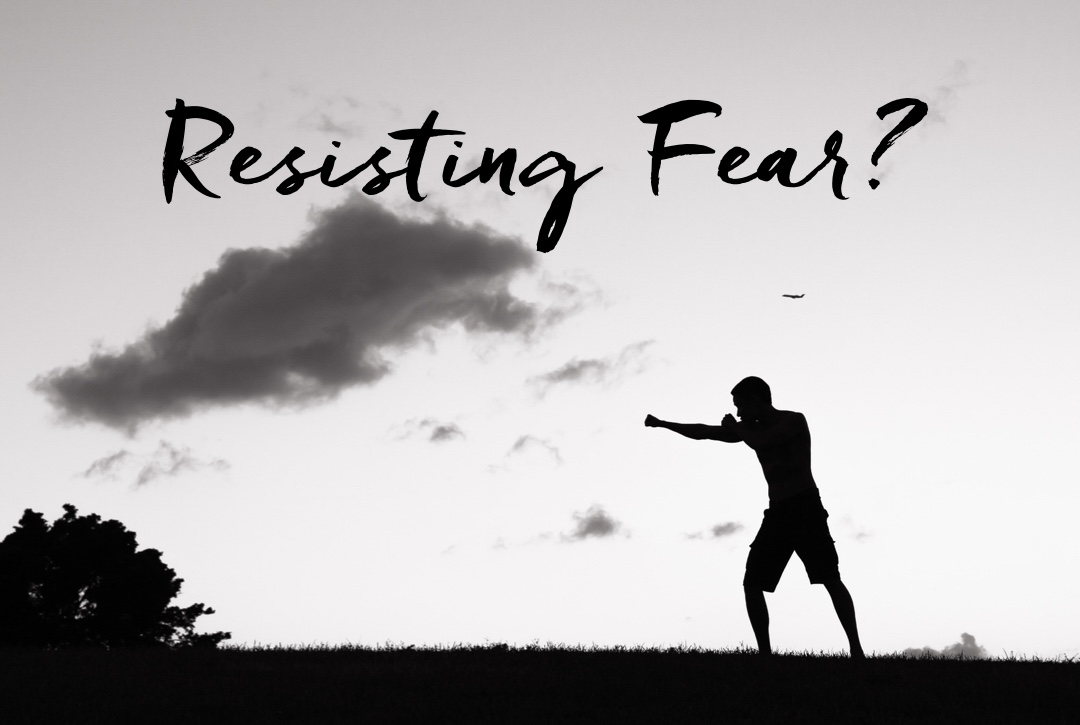
I woke this morning and didn’t feel like getting up. Yes, my body was sore from some recent ambitious exercise. But that wasn’t the reason I wanted to stay in bed. I realize now that I was wrestling with fear. I was feeling apprehension over the outbreak of war and all the uncertainties that accompany that. I was feeling anxious that we are going to run out of money. I was worried that there are things I should be doing that I’m not. I was feeling afraid that somehow I have missed my life calling, though I don’t know what else that might be. Remaining under the blankets felt like the overall best option for the day.
I finally decided to get up and make coffee for my wife. While standing there grinding the beans, my thoughts turned to Psalm 46, which I have been meditating on the past few days. “God is our refuge and strength, a very present help in trouble. Therefore we will not fear though the earth gives way, though the mountains be moved into the heart of the sea…” I began to feel better.
Fear versus Courage
Angst lurks around every corner seeking to entrap us. I still wonder if this pandemic will ever be completely over. Inflation is stretching finances thinner and thinner. Russia’s invasion of Ukraine adds to the circumstances that create fertile soil for fear of all kinds. And once we give in to one it seems that there are 20 more pushing behind it. Feelings of fear quickly multiply when we let them. But how do we stop it all? Winston Churchill supposedly said, “Fear is a reaction. Courage is a decision.”
I agree. Fear seems to pounce without warning, giving the impression that we have no option but to submit and let it maul us. Courage, however, is a choice to defy fear—act the opposite. Rarely, if ever, do I feel courageous. So, I can’t count on my feelings to come around. It was the cold decision to get out of bed this morning that challenged my paralyzing thoughts. In the same way I must actively choose to fight any fear that would try to dominate me during this season.
Read MoreChoosing the Path of the Unoffended

I was deliberately maligned. A ministry co-worker, years ago, told my supervisor that I had screamed at her when she had confronted me. When this was brought to my attention, I knew right away that she was covering for her own bad behavior in that moment. But no one else had been close enough to hear and verify our verbal exchange. I, who had always been so careful to guard my behavior, was being painted as the out-of-control bad guy, and it felt so unfair. Made me angry. But I didn’t know how to defend myself.
The only thing I could do was to act like it didn’t bother me. But in reality, it dug deep into my soul. The more I thought about it (and I rehearsed the scenario uncountable times), the more anger I felt, and the more I couldn’t stand the thought of being around this person. I knew I needed to forgive, but I didn’t feel capable, and I didn’t really want to. It felt so right to be offended by her scheme to justify herself at my expense, and so I let myself fume over the injustice of it all, seeing myself as a martyr – a victim of Christian ministry gone bad. I knew it probably wasn’t right, but I would just keep it to myself and stew on it privately.
Sometime after that (I don’t remember how long), I heard someone talking about having it as his goal to be “unoffendable.” The idea sounded like a fantasy but intriguing. What if I could live in such a way that other people’s issues did not rankle me or negatively affect my choices, the way I lived, and how I related to others?
I no longer believe it is a delusional idea. But it is a matter of taking up forgiveness as a lifestyle. Just as not holding on to an offensive person’s actions or words is a choice, taking up the offense in the first place is also something I choose to do or not do.
What’s so enticing about an offense?
I have come to see that there are times that I want to be offended. It feels good in a warped sort of way. When I can justify myself as the mistreated good guy and another person or even a whole group of people as the bad guy, something is massaged and coddled within. It’s a type of self-righteousness that separates me from others, a way to distinguish myself, to block out my own faults and sins and turn a laser focus onto the weaknesses, failings, blind spots, and sins of another. The most natural way to ease the discomfort and guilt of my own shortcomings and broken character is to zero-in on someone who’s behaving worse than I am, at least at that moment. And all along I don’t let myself think about how I’m blinding myself to the reality that this isn’t good for me. I have a choice. I don’t have to carry it.
Read MoreChoosing a Response to God’s Offer of Family

I remember as a child, hearing a school friend explain her theology of death. When people die, they go to heaven and become angels. This made sense to my young mind. And then a few years later I watched the classic movie It’s a Wonderful Life and it was cinched into my beliefs. Clarence the angel, a deceased individual, works on earning his wings by returning to earth and helping the protagonist, George Bailey, get through all his troubles. That proved it for me. Someday I’ll get to be an angel if I’m good enough! Who would turn that down?
Serious Bible study, however, eventually raised some questions about this view of the afterlife. Mainly, there is no human in the scriptures that’s ever described as transforming into a heavenly cherub or any other angelic form. According to the Bible, humans remain humans even after they die.
Hmm.
Why is that important?
The Roles God Intended
The Bible is clear that angels are spiritual beings created to be God’s servants, messengers, and worshipers (Hebrews 1:14; Luke 1:26-27; Revelation 4:8-11)—sometimes referred to as seraphim and cherubim. Psalm 8:5 says that we were made just a little lower than these heavenly creatures. And while we, in our present physical form, may fulfill similar roles as angels but less gloriously, it appears we were ultimately made for something more. Yes, humans are unique out of ALL creation.
I have often thought of God the Father, His Son, and the Spirit living in perfect unity for all eternity (read post on The Trinity). Their love and mutual submission flowing so perfectly between one another that they, the Godhead, can truly be said to be One. Imagine at a certain point, the Father saying, “We have so much love here in our divine family. Let’s make humans in our image and likeness so they can join us in our fellowship of love.” Sure, that’s not exactly how it’s said in Genesis 1:26. But neither is it a theological stretch to imagine this to be God’s intention. He wanted many sons and daughters to join Him.
We are given the impression that the first humans lived in intimate (family-like) fellowship with God in the Garden. The introduction of sin, however, changed all that. Much of the rest of the Old Testament storyline describes humankind as rebels, resisting God and His purposes. Jesus was then sent to provide a way to make us into those sons and daughters after all and show us what our Father is really like (John 1:12, 14:8-9).
Read MoreChoosing REAL Love

Valentine’s Day was that time of the year, when as a child I thought I would discover who truly liked me. At school, little pre-printed cards were distributed by each classmate that typically said something like, “Be My Valentine,” or “Be mine.” Some even had a piece of candy taped to it. Regardless of what the intention of the giver was, all it meant to me was that someone was thinking of me as special. But it was more often than not, disappointing. Even when I received a card from one of the girls or guys in the class with strong social capital, it took only a few seconds to realize that everyone else had received one from that person too. And then there were the cards that had “mushy” words of affection added to them, typically from someone whose special attention I did not particularly desire; for some reason those cards never counted. In the end, it was usually a day of letdown. I was looking to receive something, a certain feeling, that I did not know how to articulate. But I never thought about what I might have to give to another classmate. The Day would leave me with the question that I still often ask: What is love all about, really?
America still appears to celebrate our cultural understanding of love on Valentine’s Day. While some (children and adults) use it as a celebration of affectionate friendships, I think it’s safe to say that the majority understand it as a time to commemorate romance and sexual attraction. On this day we tend to exalt the deeper feelings of allure along with physical and emotional chemistry one person experiences with another. It is a far cry, I suspect, from what the original Saint Valentine would have endorsed.
Read MoreChoosing an Exchanged Life

I wasn’t more than ten years old when I watched my grandfather butcher a pig. Contrary to what some might imagine, I don’t think I was emotionally damaged by it. Sure, it was gruesome and bloody. But I also remember thinking that this is how we get food. I liked meat. I liked the idea of nourishing my body. And that was enough for my kid’s way of thinking to justify the act and not blame my grandfather for any cruelty.
Years later I learned that there was a lifestyle called vegetarianism. A classmate confronted me with the horrors of murdering living creatures for human consumption. I was troubled. Was it wrong to kill an animal for food? And then I read the novel When the Legends Die in one of my high-school English classes. It told the story of a young Native American struggling to navigate the traditional ways of his parents with the practices of white men that had been thrust upon him. At one point, the protagonist returns to the forest to hunt like his father had. After killing a deer, he thanks it for its sacrifice so that he, a man, can eat and live.
Kind of weird to pray to a dead animal, but something about it left an imprint on my imagination.
Death for the Innocent?
After all these years, this scene is the only one I remember from that book. It helped me visualize and articulate a personal proverb that was forming in my mind and that I’ve never forgotten: sacrifice precedes life, and thanksgiving is always the appropriate response.
Life in this world holds a mysterious quality that’s difficult to explain. The death of something innocent—like a deer or pig—makes it possible for something or someone else to have what is needed to live. On the surface, it doesn’t feel fair or even right. Why does something living have to die? Yet it’s the way it is—the circle of life, as some call it. Even vegetarians and vegans must kill certain living plants to nourish life in their own bodies. And gratitude is always the humble and right response.
Throughout human history this insight, in one form or another, has been developed, and implemented. Animal sacrifices have not always been merely to provide for food but also for appeasing deities to gain favors that would supposedly improve human existence. Human sacrifices were thrown into the mix as well. The ancient cultures of the Egyptians, Chinese, Carthaginians, and Aztecs are a few of the many that believed the more precious the sacrifice (an innocent child, accomplished warrior, or virgin), the greater the ultimate benefit for the community. It made sense to them, though it’s mere murder in our minds today.
Biblical Sacrifices
The ancient Israelites, also, were instructed to make bloody offerings, though not human. Perfectly-formed bulls and lambs gave up their lives to somehow provide a holy covering for the imperfect Jewish community. Their tabernacle and temple served as places for the continual butchering of animals. Why? Though never thoroughly explained to the satisfaction of modern rationalism, a theme of the innocent dying for the sake of the guilty runs throughout the Hebrew scriptures.
It is accepted as a given from the very first chapters of the biblical story. The first sin recorded in Genesis 3 results in the guilty humans hiding from God because they are suddenly aware of how different they are from their holy Creator. To mercifully clothe their nakedness, which was a tangible expression of their shame, God provides animal skins to wrap them in. The reader is left to figure out the obvious conclusion: innocent creatures had to die to cover the sin and shame of the humans that God, for some reason, cares for so much. And that is just the beginning.
Read MoreChoosing REAL Freedom

“Being able to do whatever I want to do.” That’s how a young man at the mall replied to my friend who was randomly asking strangers to define “freedom.” Many of the other responses that day were similar. After later hearing all the descriptions, it struck me that I wasn’t sure I had a clear definition in my mind of this word we throw around so often. We Americans have traditionally prided ourselves in living in the “Land of the free.” So, what does that mean? And of course, it’s also an important word for Jesus followers. We’re told that “For freedom Christ has set us free” (Galatians 5:1, ESV).
An online dictionary defines freedom as “the power or right to act, speak, or think as one wants without hindrance or restraint.” This sounds good for me personally. But when I think about others having this same ability, particularly those with below-average character, those with dark intentions, and those who just don’t like me, I’m uncomfortable. I want restraints put in place. I don’t want others doing whatever they want without hindrance because I don’t trust everyone’s heart motivations. Nor am I confident in everyone’s ability to think through all the long-term consequences of doing whatever they feel like. And thankfully, there are some restraints, such as social expectations and laws.
Freedom is a strange thing. That which I passionately protect for myself, I reluctantly release to others. After all, if freedom is not understood or used rightly, it’s dangerous.
God’s Freedom
What is the Bible talking about when it says, “So if the Son [Jesus] sets you free, you will be free indeed” (John 8:26, ESV)? Free from what? What has tied up humanity and left us enslaved?
Read MoreChoosing a Different Kind of Wealth

A couple of years ago, I had a long layover at an Australian airport. While waiting in line to pay for a snack, the man in front of me haggled with the cashier over his purchase. He wanted to use Bitcoin to buy a candy bar. The woman ringing up the sale stated multiple times that they didn’t accept such currency. The man, for his part, went on to give a somewhat lengthy lecture on the need for them and everyone to get with the times because cryptocurrency is the future. Besides being irritated by the delay he caused, I remember thinking how foolish and out of touch the man sounded. In my limited understanding at the time, cyber money was in the same category as Monopoly money – worthless for any practical purpose.
I don’t know a whole lot more today than I did back then. But I do now believe that it’s unlikely that cryptocurrency is going away. It stirs controversy and polarizes investors because it is challenging the way we understand money. And at an even more fundamental level, it is calling out how value is determined. Rather than continuing to accept the traditional system where governments and financial institutions largely control currency, crypto investors are betting on the expanding appeal of a decentralized scheme where no single person or group can manipulate value. It’s sounding more interesting even if it still seems a bit strange.
What makes something valuable?
Where value comes from is a question to ponder. Cryptocurrency and NFT’s (non-fungible tokens) after all are digital. There is nothing to hold in your hand unless you cash-in through a broker of some kind. A market for NFT artwork is also developing. Unique digital NFT collectibles (Google “Bored Apes”) are being sold for thousands and even millions of dollars.* And all this cyber stuff attracts investors in the same way an original Van Gogh or Rembrandt does. It’s not the material itself that holds intrinsic worth but what it represents: beauty, status, freedom, decentralization.
Value is determined by what people are willing to pay for any given item or service. Though the dollar amount may fluctuate with the needs, interests, and moods of people, value itself is a very real entity, even if it is mysteriously intangible, fluctuating in strange ways. It can cause the price of a baseball to shift from $8.99 to $752,467.20 in just a few seconds because a certain person hit it over a fence.**
Read MoreChoosing to NOT Forget

Last month, on December 7th, a day was remembered that many of the past generation vowed to never forget. Eighty years ago, the Empire of Japan launched a surprise aerial attack on the American naval base in Honolulu, Hawaii. In the harbor, 21 American ships were sunk or damaged, leaving over 2400 American servicemen killed that morning and more than 1100 wounded, many while they were still in their beds. The next day, the U.S. Congress declared war on Japan, and America entered World War 2. It would be a terribly bloody four years, filled with experiences that many people would want to forget.
As with the beginnings of all wars, the Pearl Harbor attack is a sobering and unpleasant event to reflect on. I am particularly drawn to remember it, however, because my uncle was stationed there at the time. As a child I heard his stories of driving a military jeep while trying to outmaneuver Japanese fighter planes strafing the roads around the naval base with their machine guns. Meanwhile his newlywed bride was down at the harbor’s edge pulling sailors from the flames of the oil-coated water. It was supposed to have been a quiet Sunday morning, the first day of their honeymoon. These and other descriptions burned deep impressions into my mind.
Besides the historic value, there are other reasons for stopping to reflect on events from days gone by. Philosopher George Santayana said, “Those who cannot remember the past are condemned to repeat it.” This aphorism rings true in a general sense, especially for those of us who consider ourselves history buffs. The illogical, self-centered, damaging enterprises and policies that people and governments repeat over and over is difficult to fathom. It’s as if we’re trying to NOT learn.
Read MoreChoosing the Help That’s Offered

It’s a nameless, forgotten movie from my childhood. But one scene has remained etched in my mind for decades. Perhaps it’s a composite of multiple movies. An individual, walking through a trackless jungle, steps into quicksand. He tries to work his way out, but the more he moves the deeper he sinks. Fortunately, he has a companion who avoided the trap and is able to throw the sinking man a rope or long stick from the edge of the quagmire and pull the friend to safety.
Why has this episode remained so vivid in my memory? It’s probably due to the sheer terror that comes with imagining being so powerless in such a deadly situation. For years afterward, I was on constant lookout in my wanderings through woods or rural areas for any miry hole that I could stumble into. Afterall, I might not have someone there to pull me out.
Helplessness is a terrible feeling. The inability to move out of an unpleasant, restrictive, or toxic situation can eventually squeeze hope out of a person. Whether it’s life-sucking addictions, character-crushing jobs, soul-suffocating relationships, death-dealing circumstances, or merely mind-numbing boredom: to be unable to lift oneself out of a cheerless pit is cause for all categories of despair. How does one find relief and freedom?
Read More Choose This Day