
Choosing to Resist an Adulterous Heart

The first time I remember contemplating the word “adultery,” I wondered why it was called that. My conclusion, as a child, was that it was a word to describe the many things that adults do. Though I did not understand it, at the time, this homemade etymological explanation made sense to me. The world of adults was still mysterious. It wasn’t till I was a teen that the more specific meaning became clear. The word “adultery” was then replaced with a more contemporary term, “having an affair.”
But opportunities to ponder expressions of the word did not go away. Movies and stories referred to it. I eventually heard of colleagues and friends having extra-marital affairs, occasionally calling it adultery. But my understanding of the meaning had to be expanded when I ran across something Jesus said to those following Him:
“Then some of the scribes and Pharisees answered him, saying, ‘Teacher, we wish to see a sign from you.’ But he answered them, ‘An evil and adulterous generation seeks for a sign, but no sign will be given to it except the sign of the prophet Jonah’” (Matthew 12:38-39 ESV).
How could an entire generation of people be adulterous?
Recently, I returned to wrestling with this question. The word, used as an adjective in this verse, doesn’t seem to refer to sexual unfaithfulness. So, what’s behind it?
Read MoreChoosing to Not Give Up

After my face was smashed into the sweaty mat several times by a brute bigger than me I changed my mind. That was enough, and I gave up the thought of becoming a wrestler. The high school coach had said he could make me a champion, but one practice was enough. Sure, I was young and wanted to prove my strength and sense of manly confidence. But there was nothing glorious about this. The air in the room was stifling hot with the scent of body odor permeating everything. I walked out of that wrestling room seeing nothing worthwhile in submitting myself to such an abusive workout every day for an entire season.
I look back now and wonder what I could have become if I had believed the coach enough to persevere. A different perspective has taken hold over the years. Wrestling now seems to be a poignant metaphor for life. And the longer I seek to follow Jesus, the more wrestling images come to my mind. But, at the same time, it doesn’t seem right. Shouldn’t my expectations of the Christian life be that of royalty sitting at a table having all that I need or want served on a silver platter? I am a child of the Creator and King of the world after all. I have been given the assurance of ruling with Christ and judging angels!
Uncomfortable and Confused
This seems to be the tension of following Jesus. He came to earth to make me a child of God (John 1:12), and has even said that I will one day share His glory (Romans 8:17). So many promises have been made that reinforce the idea that I am a favored child and should expect nothing less than good gifts from my Heavenly Father (Galatians 3:26; 1 John 3:1; James 1:17). But then there are promises of sharing in Christ’s sufferings (Philippians 3:10-11). I am called to pray without ceasing (1 Thessalonians 5:17), persevere through trials and temptations (Romans 12:12), and remain faithful even if it means an early death (Revelation 2:10).
I am left with two pictures of what I can expect my life to be like as a follower of Jesus, but they stand in tension with each other. It appears that the images of royalty and promises of glory are true. But there is a process of preparation for getting there. There is something that God desires to form in us. And the image of wrestling is an effective metaphor for understanding what that is.
Read MoreChoosing to NOT Make Myself Into a God
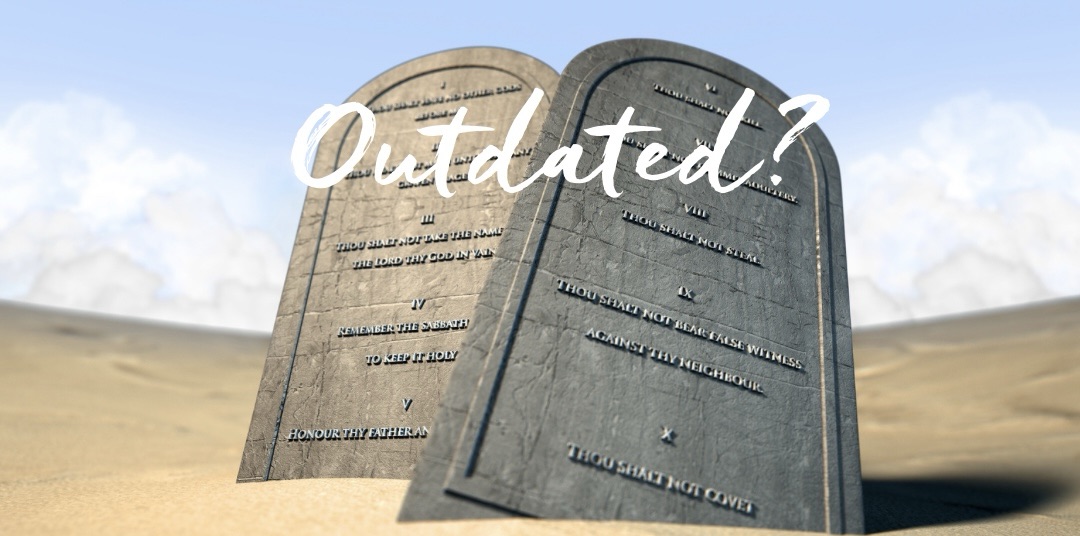
Regardless of the secularism that is woven into our present-day culture, we are a generation of worshipers. We tend to revere whatever makes us feel good. And that can cover a broad spectrum of deities. Whether they be the gods of food, money, or sexual expression, there are a host of individuals and groups who bow and obey whatever these icons dictate. This present-day pantheon, however, is not limited to the traditional fleshly indulgences. Many worship at the altar of education, family loyalty, political power, scientism, and nationalism to name a few more.
You may ask, what is my definition of a god? All that I have mentioned above are a part of living in this world. And that is exactly the problem. We have taken pieces of what are meant to serve humanity here on earth and made them into things to which we sacrifice and give ourselves in ways never meant to be. The way I see it, that which I primarily look to for guidance, meaning, comfort, and provision quickly turns into that which I worship. Afterall, what is worship if it is not the act of giving myself to something I believe will provide purpose and utility for my existence?
Foundational of All
The very first of the 10 Commandments is “You shall have no other gods before me” (Exodus 20:3). There is a reason it is first. It is primary. All other commandments and expectations of humans according to the three largest monotheistic religions (Christianity, Judaism, and Islam) depend on this understanding. We must choose to resist the temptation of setting up other deities to direct and shape our lives. Because it is the first on the list, it seems that it may be the easiest or most common to break. We need this constant reminder that we must worship nothing else.
We would do well to spend a good amount of time meditating on what this means. NO OTHER GODS! It’s not really saying that no other gods exist. It seems to be indicating that there are many possibilities for gods in our lives and we have to learn to turn away from them and choose to worship the One who is truly and rightfully our God and Maker.
I could go down a list and give you my opinion about the many ways we turn various things, feelings, and ideas into objects of worship. But instead, I’m going to focus on one: the god of self.
Read MoreChoosing the Right Ideas to Consume

Freshly baked bread. The smell and taste of it are difficult to beat, especially when it’s warm, just out of the oven. My mother made it when I was growing up and still occasionally does. It’s a comforting memory associated with pleasant feelings. Even now, as I seek to eat healthier, I often choose to ignore the amount of carbs I’m taking in as I slather butter on the second and third pieces. What is it that gives freshly baked bread its reassuring flavor and satisfying texture?
The mystery of leaven was first introduced to me as I watched Mother bake. She would allow me and my brother to take turns “punching” the rising dough as it expanded. As little boys, we were in awe of how it grew, spilling out of the large bowl. And then of course, there was the final product. Yum! I learned to appreciate yeast even more after tasting a type of bread that had no leaven in it. In the opinion of my young still-developing palate, nothing compared to the light and airy texture a few teaspoons of the ivory-colored grains mixed with flour and water could produce.
Leaven in the Bible
Confusion came when I began to read the Old Testament for myself. Yeast, or leaven, was bad. As the Jews celebrated Passover each year, they were instructed to cleanse their homes of any form of the substance. What? Get rid of this wondrously magical stuff? I learned that on one hand it was meant to remind Israel of their rescue from slavery, when they did not have time to use yeast and let their bread rise before baking. On the other hand, the prohibition on all forms of leaven for the Passover celebration seemed to indicate that yeast represented something negative.
I read the words of Jesus and was more confused. After performing the great miracle of provision — multiplying bread and fish for thousands — He told his disciples to be alert to the dangers of leaven: the yeast of the Pharisees and Sadducees (Matthew 16:6). Being that these two religious and political groups were not known for their baking skills, what was Jesus talking about?
Read MoreChoosing a Strong Finish
I had a short stint running track when I was in middle school. It was enjoyable until the coach put me in an 800 meter race that I had not prepared for. As a sprinter, I applied what I knew and started out strong. But halfway through I had nothing left and ended up coming in last place. Not only was that the last track meet I ever participated in, but it was also the day it dawned on me that what is reserved for the end of a race is just as important, if not more so, as what is put in at the start.
Of course, beginnings are important. Poor starts in athletic events, and life itself, can make winning seem impossible. But even with a disappointing outset, the end is never fully determined until the crossing of the finish line or the ticking of the last second off the clock. It’s true of races, soccer matches, and football games. The way a person or team finishes, more than how they begin, says much about who they are and what they value.
This is true for how life and faith are lived out as well.
They Were Chosen, But . . .
The Bible is full of stories of people who started out well but are now remembered for their poor finishes. Saul, the first king of Israel, comes to mind. He seemed to be such a humble unassuming guy when he was first anointed to lead Israel. But by the time his reign ended, he was ignoring all the instructions of God’s law and prophets and was a paranoid and unstable man. And then there was Judas. Chosen by Jesus as one of the Twelve, he had every opportunity to be remembered as one of the pillars of the Christian faith. Instead, he ended up being a thief and betraying Jesus for a bag of silver.
Strong beginnings in life are helpful. But it is how one finishes that speaks the loudest and most powerfully impacts those watching.
Read MoreChoosing Strange Love

I read of her in my college literature class, Lady Elaine of Astolat. A figure in Arthurian legend, she died from the weight of unrequited love. Sir Lancelot just didn’t feel it the same way she did.
Of course, dying because of or for the sake of love is a theme that has popped up in stories for a while now. Think Romeo and Juliet as well as Jack in Titanic. Recently, a man died because he threw his body over his wife and daughter when an assassin’s bullets sprayed a crowd at a political rally. The two women are alive because of what he did. It is viewed as a heroic act of love. Why does the combination of love and death strike such deep chords in most people?
Suffering, Death, and Love
Much of our culture’s talk about love centers on sublime feelings or “good vibes.” How do I know I love someone? I experience a thrill or a warmth inside. That person always agrees with me. I want to be around that person all the time. I believe I will be happier and more fulfilled because I have that person in my life.
So often, the focus of love is on me and how the other person makes me feel! Weaving our idea of love with death seems odd for ordinary circumstances. It’s no surprise then that phrases from traditional wedding vows are being dropped. How often do we now hear, “Till death do us part”?
It’s common in our culture that when the relationship’s euphoria or happiness wanes, we start wondering if we still love the other person. The doubts are especially strong when the other becomes a burden, slows me down, keeps me from fulfilling my dreams. The idea of dying (or being inconvenienced) on behalf of someone who irritates me, who doesn’t hold to what I value, or for whom I have no feelings seems absurd, and for some, even wrong.
What is love supposed to look like?
Read MoreChoosing to Think Big

What gives meaning to life? That is the philosophical and spiritual question that has been asked for thousands of years. As a follower of Jesus, I have assumed that all others who follow Him would answer this in the same way: it is God. Through His son, Jesus, “the image of the invisible God” (Colossians 1:15), He has brought all reality together. The purpose of life is found in Him.
But I have learned that though there are many who claim to believe in God and would nod in agreement with these words, not all live their lives as if this is true.
Universal Meaning?
I recently read a quote from the diary of an author from the early 20th Century. Though I do not know anything about her faith, her ideas easily represent how many people approach and resolve this question of what gives life meaning. She says:
“What makes people despair is that they try to find a universal meaning to the whole of life, and then end up by saying it is absurd, illogical, and empty of meaning. There is not one big, cosmic meaning for all, there is only the meaning we each give to our life, and individual meaning, an individual plot, like an individual novel, a book for each person. To seek a total unity is wrong” (The Diary of Anais Nin Volume 1).
Her approach to minimizing the anguish most people feel as they try to figure out life’s purpose is don’t think too big. Seeking meaning that fits universally for all of existence never ends well, according to this author. Keep it small so you can manage it all by yourself. And I have no doubt that many today agree with her. What was interesting (as usual) were the comments on this post. Most sang the praises of this philosophical take on how to view life. One said, “Meaning in life is only found when I focus on the individual, particularly me. If it’s not going to make me happy then I’m going to have nothing to do with it.”
Read MoreChoosing to Limit Myself
I recently had someone describe her problems to me as rooted in co-dependency. She could see that her choices had become so enmeshed with another person’s responses that she no longer knew what was hers and what was the other person’s. The solution she came up with was to set more boundaries in her life.
She recognized that the lack of distinction in her own identity left the door open for others to manipulate her and use her to meet their own personal needs, often to her detriment. Letting people do this had at first seemed to be a loving thing. It was how she felt accepted. But as this tendency continued, she realized she was often left empty, confused, and unsure of who she was anymore. Having no personal boundaries actually devalued her. This revelation gave hope that life could be different if she could change. Of course, there is a lot of work ahead. She is like so many of us who do not easily accept restrictions on how we operate.
What is it about boundaries we don’t like?
Fences seem to put out an invitation to be climbed. There always is something on the other side that is attractive, making promises, or declaring a new level of righteousness or pleasure for those bold enough to ignore the old ways and push beyond set limits. Laws become suggestions or challenges to just not get caught violating them. Rules are quickly judged to be unjust or frivolous. We humans find all kinds of ways to discredit limitations. That is unless we can start to see that some (and perhaps all) are meant to protect us from harm and allow us to grow.
Read MoreChoosing a Better Option
It’s a condition I have had for many years.
I get infections in my colon. They can be extremely painful and put me in the hospital. I have learned to recognize the feeling when it’s beginning and usually have to fight a sense of panic at the first twinge. My initial impulse has been to scramble for antibiotics. I send a frantic call to my doctor begging for a quick prescription. In recent years, however, those pills promising healing relief have made me feel almost as bad as the sickness.
What to do?
The condition is called diverticulosis. When an infection develops, it’s known as diverticulitis. I finally came to the conclusion that through increased fiber intake with water, probiotics, and a lot of prayer, I could avoid the antibiotics. It has worked for the past few years!
So, what’s the point of detailing my journey toward intestinal health?
When I’m in pain, I look for relief — usually whatever I believe will provide it the quickest. Sometimes what I imagine to be a cure ends up being as bad, if not worse, than the disease from which I am seeking freedom. I don’t think I’m alone in this.
Emotional Pain?
Discomfort of the soul stirs similar desires for relief. I don’t like feeling bad, whether it be sadness, guilt, inadequacy, helplessness, or boredom. However, I typically do not seek to understand where these feelings of uneasiness come from. I just want relief. So, I reach for the nearest remedy that will dull or cover the distress. The self-medication I apply to my soul or psyche rarely, if ever, solves anything. It either merely prolongs the uncomfortable feelings, once the quick fix wears off, or it leaves me feeling worse with increased sadness, intensified guilt, or far-reaching confusion.
Read MoreChoosing a Different Look

It’s been used as a joke, but there are some very funny images to support it as a reality. Do humans resemble their pets? In attitude and temperament? Even in their looks? It appears the answer is a strong YES! This phenomenon, particularly with dogs, has been studied and photographed multiple times*. Theories vary as to why this is more than a coincidence. But for me, it is obvious. We are attracted to things (and people) who are like us in some way. And we tend to take on the characteristics of those we hang out with.
This can be seen in couples who have been married for many years. Friends who are constantly together also begin to take on similarities they don’t even recognize but are obvious to observers. While my wife and I will be the first to point out all the ways we are different, others see our similarities: our values, our lifestyles, our faith, and even some of our habits and mannerisms. It wasn’t always that way. But having been married for more than 40 years, it’s fair to say we’ve rubbed off onto each other a bit. And, as for the non-couples out there, just look at social groups, teens and on up in age. From hairstyles to clothing choices, to the use of piercings and tattoos, not to mention language and all the other cultural traits. We become more and more like those we open our lives up to.
More than a physical thing
I can see a spiritual side to this as well. I heard it said many years ago, “You become like whatever you worship.” Why would this be so?
We have to consider what it means to worship. This is not a reference to music or singing. It has to do with what we adore and love. One of the thoughts I have gleaned from reading Saint Augustine’s teachings: we are not ruled by what we know (that is, our intellect), but we are ruled by what we love (that is, those things we choose to give ourselves to).
The people, the attitudes, the ideas we choose to embrace will be the most powerful direction-givers in our lives. Over time, we become more and more like that which we think about, that which we meditate on, that which we obey, that which we adore. Worship is obedience and submission. It can be applied to anything and anyone. And it will always produce some kind of fruit in our lives.
The anonymous poet who penned Psalm 115 gives us thoughtful insight. Idols and those who make them are described. They are crafted by humans and reflect what the human crafter values. They also mirror human foibles, flaws, and blindspots:
“Their idols are silver and gold,
the work of human hands.
They have mouths, but do not speak;
eyes, but do not see.
They have ears, but do not hear;
noses, but do not smell.
They have hands, but do not feel;
feet, but do not walk;
and they do not make a sound in their throat.
Those who make them become like them;
so do all who trust in them” (Psalm 115:4-8 ESV).
Be careful what you worship
True worship always calls us to rely on something. It can be money, public opinion, education, our own reasoning abilities and feelings, or God. The Psalmist effectively says that what we worship and trust in pretty much determine what we think about, what we adore, what we do, and ultimately what we look like and become.
But of course, there is another aspect to all this. What might we look like or become if we give ourselves over to be true worshipers of God? How does consistently loving God shape us from the inside out? If one is truly worshiping the One who defines beauty, goodness, justice, and love, then a person’s character will reflect Him: patient, forgiving, loving, committed to truth and righteousness, to mention a few qualities.
By implication, the writer of Psalm 115 is telling us how worshipers of human-made gods are limiting what they ultimately will be able to do with what they have:
They will have physical mouths,
but what they say will be meaningless as if nothing is being communicated.
They will have physical eyes
But they will be blind to what is permanently valuable.
They will have physical ears,
but what they hear will not be a voice communicating truth nor one guiding them into eternal wealth and satisfaction.
They will have physical noses,
but their spiritual sense of discernment will be unable to distinguish between what is eternally good and that which brings only short-term relief and pleasure.
They will have physical hands and feet.
But what they feel with all their senses will not be reliable, and neither will their feet take them to places that give true health and life.
Like our Father
Our lives are going to be modeled after someone or something. It’s inevitable. We can determine now what those features will resemble. The Bible is clear. Jesus came to make us children of God (John 1:12). We are called to be like our Heavenly Father, to take on His characteristics.
Choose this day what you are going to look like. We all are in the process of forming our eternal identities. It has everything to do with what we are bowing down and giving ourselves to now.
We may take on similarities with our pets, spouses, and good friends. But the shape of our character, ultimate beauty and worth has much more to do with what and WHO we love and worship!
Choose well! Your spiritual complexion depends on it!
Response:
- How might the things I love influence my attitudes and actions? For good or for ill?
- What do I trust in that shapes how I think? Is it leading me toward God or away from Him?
- What things, relationships, or accomplishments in my life have the potential of becoming idols?
- Jesus, what needs to change in my life so that I look more and more like you?
*Google “humans resembling their pets” and see what comes up.
(Edited and reposted from April 17, 2023 “Choosing What I Look Like”)
 Choose This Day