
Choosing Not to Accuse

The note was addressed to the leadership of our ministry, but for some reason it was put in my box to deal with. A few weeks earlier our facility had been used as a wedding venue. Several of our ministry staff volunteered to help with the logistics of the celebration. A couple hundred people had sat through the ceremony and then stood in a reception line before sitting down for a meal. Part of the line went up a short flight of stairs. The note was from someone who attended the wedding and observed an elderly man struggle to get up the five steps. The writer was deeply concerned that no one assisted the man. The punch line of the message was, “How can you call yourselves a Christian mission organization when not one of your staff helped him? I will certainly never support your ministry when you won’t even serve the needy in your own building.”
My first impulse was anger. How can this person blame us for something that dozens of others stood and passively watched? Our staff were in the kitchen helping prepare the meal; they weren’t even there. And where was the note-writer in all this? Why didn’t she provide the needed assistance? But then after a few minutes of stewing, I felt the pang of the allegation. Why didn’t one of us help? How did we not notice this need? Were there others who thought badly about us? How could we change people’s opinions and show them that we really are good?
What’s under the surface?
Sure, there are situations where charges of wrongdoing are appropriate and need to be made. When we see injustice, almost everyone desires it to be made right. People should be held accountable for hurtful behavior so that changes can be instituted and wrongs corrected. But behind many informal indictments of wrongdoing there is more going on. Accusers typically want to see someone suffer for the hurt that’s been inflicted. The urge for payback is strong when a person has been offended or unjustly treated (read post on Anger). And then there are times when accusers are projecting their own sense of guilt or shame onto another (which is what I believe was happening with the note-writer). Finding someone to blame for the wrong around us or our own failings seems as natural as breathing. However, accusations thrown at others easily morph into full-fledged judgments, cancellation, and plots for vengeance.
But, with what are we aligning ourselves when we become finger pointers?
Jesus said, “Do not judge others, and you will not be judged. Do not condemn others, or it will come back against you. Forgive others, and you will be forgiven” (Luke 6:37 NLT). There is a “boomerang” spirit that is loosed when I take it on myself to damn others for their sins and failings. I can’t escape being negatively affected as much, if not more, than the person I’m condemning. When I zero-in on another person’s fault, bad behavior or transgression, be it legitimate or merely something I’m imagining, I end up rehearsing the offense over and over in my thoughts. It easily plants itself and grows. The Bible calls it a root of bitterness (Hebrews 12:15). The deeper this shoot goes down into my soul the more evil the other person appears and the more righteous my position feels. With the bitterness comes a blindness that distorts the way I see other parts of reality as well.
Read MoreChoosing Humility

It’s a simple but often maligned and misunderstood word. To be considered humble is a compliment for some and an insult for others. It’s frequently associated with being soft spoken, self-deprecating, and wallowing in low self-esteem. While most people consider it a virtue of some kind, few of us are out there actively seeking to become more humble. We intuitively know that something about it is not always going to feel good. And if someone recognizes that more humility is needed and wants to obtain it, it’s a rare person that has any idea of how to go about pursuing it.
One of the reasons more people don’t seek it is that we don’t really know exactly what it is. So many of us look for certain feelings within to assure ourselves that we possess the virtues we want. Yet the virtues of the Christian faith are much more about choosing than feeling. I have often invited students in my classes to stand up and be humble for a few moments. The clever ones will respond by saying that if they stand while everyone else is sitting, then they’re lifting themselves above the others and therefore not humble. But most of them just scratch their heads in puzzlement. Even if it is a feeling, how can a person create it on the spot?
How does one be humble on demand?
Emptying Myself?
I have not been able to locate a dictionary-like definition of humility in the Bible. And yet the specific word and all its forms are referred to throughout both Old and New Testaments. The best explanation I can find is in the second chapter of Philippians. It’s more of a word picture than a technical definition.
“Have this mind among yourselves, which is yours in Christ Jesus, who though He was in the form of God, did not count equality with God a thing to be grasped, but emptied Himself, by taking on the form of a servant, being born in the likeness of men. And being found in human form, He humbled Himself by becoming obedient to the point of death, even death on a cross” (Philippians 2:5-8 ESV).
Ironically, it’s Jesus, the image of the Almighty God Himself (Colossians 1:15-19) who shows us what humility is. From this passage I gather that this virtue has much to do with surrendering that which is or that which I believe to be mine, doing it for the sake of serving another. Jesus chose to give up all the privileges and power that were His as a member of the Godhead. He did this in order to come to earth as a human and serve us by surrendering His very life.
It’s difficult to comprehend both the “what” and “why” of this. What does it mean to empty oneself? And why would anyone choose to do that?
As I have pondered what it means to be a follower of Jesus, I have noticed that even after seeking His forgiveness and submitting my life to Him, there are many things still in me that don’t fit my new identity. To walk out who God now says I am (that is His child) there are many things that have to go. To be like Jesus, I have to empty myself.
Read MoreChoosing to Soften My Heart

“I love you with all my heart.” I’ve heard this phrase a few times in my life, and it always brings a smile to my face. It’s a stereotypical expression that usually comes from someone trying to express deep feelings but hasn’t come up with a more creative way to say it. Yet as long as it comes from the heart, we’re usually okay with this quaint expression. But what does it mean? Why love from the heart?
Most people I know, relate a person’s heart (not to be confused with the physiological blood-pumping organ) to their emotional response. In other words, to love someone with all your heart means to feel your love for that person deeply. Interestingly, that’s not the biblical understanding of the heart. A Bible professor once told me that the ancient Hebrews associated deep feelings not with the heart but with the bowels. Try that on your significant other: I love you with all my bowels. There’s a reason that hasn’t caught on. The biblical perception of the heart has less to do with feelings and more to do with choices—the will. Biblically speaking, the heart is understood to be the executive center that oversees the whole person. My heart directs the path I take and all my responses to outside circumstances.
The Executive Center of My Being
So, it is in my heart where I determine how I engage with the world. My actions, attitudes and words all flow from the mysterious workings of this place inside me. Of course, the Bible has a lot to say about the heart. We’re told that we are to guard it because it determines the course of our life (Proverbs 4:23). We learn that it’s capable of being deceived and extremely wicked (Jeremiah 17:9). But we’re also informed that it can be pure and sincere (Matthew 5:8; Colossians 3:22). In addition, Jesus said we’re to love God with all of it (Mark 12:30). Whatever direction one’s heart goes, it takes the rest of the person along. It’s no wonder that in seeking an intimate relationship with each of us, it is the heart that Jesus asks to be given to Him. For when He has my heart, He has me.
And that’s the trick. Our hearts don’t naturally want to be given completely to someone else, especially to a divine Lord. To the heart that doesn’t recognize who Jesus is, such a request appears as an invitation to captivity and slavery. But for the one who sees Him as the rightful Lord and source of all life, to submit control to Him is peace and the beginning of true freedom.
A Stony Heart Toward God?
But so often our hearts resist Him. We harden our will against God and His ways. Every heart has this ability to harden or soften its attitude and response toward another person. The condition of my heart is determined by the beliefs I entertain about others. Do I see them as good or bad, for me or against me, trustworthy or unreliable? It’s the same with how I perceive and what I believe about God. And with Him, I can also harden my heart by simply ignoring Him. This is especially true when He shows me something He wants me to do or respond to and I simply say, “no” or convince myself that that wasn’t God communicating to me. When I do this, it’s like I’m spraying my heart with a protective coating of concrete that dulls my ability to sense His prompts or hear His voice.
The most famous hard heart in the Bible is Pharaoh. The story is told in the Book of Exodus, chapters 7-14, how this Egyptian king resisted letting the Israelites, whom he had enslaved, leave. But where it gets confusing is that many times it’s worded that God hardened Pharaoh’s heart, and that’s why the man refused to respond to all the miracles he witnessed.
Some people interpret this to mean that God overrode Pharaoh’s will. It seems more likely to me, however considering the rest of scripture, that God, who searches and knows every heart (Jeremiah 17:10) merely saw the direction toward which the king’s will was already bent and let him go where his heart was leading him. And God used that for His purposes. Often when people are already resistant, added pressure only pushes them harder into their obstinate position. The pride of Pharaoh was such that he would not submit his “executive center” to anyone, no matter how many miracles he saw. His heart hardened more with each time God confronted it with a supernatural display.
Hardness of heart is a condition that even followers of Jesus must be concerned about. It’s a soft heart that God is looking for in His followers. When our hearts are tender, they sense what God is wanting from them. We may not like it at the moment and it may be inconvenient, but soft hearts respond to God’s stirrings. Crusty layers of hardness develop as we decide we don’t want to submit to Him on specific issues. It may be through overt defiance or a more subtle passive negligence of just not paying attention. Either way, hardness and callouses of insensitivity grow thicker as choices to resist or ignore become more automatic. And it’s later that we wonder why we can’t feel the love of God anymore or hear His voice like we used to. Hearts grow hard.
They don’t transform into stone overnight.
What’s the Condition of My Heart?
I first have to recognize the signs of a hard heart. Once I see where I’m susceptible, I can address my condition by asking God for help. It is amazing how willing He is to lead us in the softening process if we will only humbly ask. While there’s probably many indicators, I can think of three obvious ones.
1) A hard heart is insensitive to the pain of others. Lack of sensitivity, especially to those who are unlike me, is a common symptom of a heart growing crusty. God in His holiness is very unlike me. I and many like me have hardened ourselves to what He desires. With our whole nation being confronted with racism right now, have we asked God how He feels about where we’re at? Our insensitivity to the hardships or injustice others are facing often is indicative of our insensitivity to God. God has feelings, and they may be different than ours. Have we asked Him to show us what they are? He has much He desires to reveal to us regarding many matters, if we’ll open our hearts.
2) A hard heart cannot be penetrated with new ideas or perspectives. The inability to consider what’s outside my own context, be it political, religious or philosophical is a bright red flag of warning that stony callouses may be growing. It’s not that I have to accept everyone else’s view point as right or good, but can I humbly listen without accusations or defensiveness? God’s perspective often challenges me if I’ll just stop and ask Him what He wants me to see. The problem is I often think I already know what His perspective is, or I just don’t care.
3) A hard heart cannot adjust or flex to embrace something that feels strange or unknown. Sometimes this has to do with fear of change. But often for me it is due to my hatred of discomfort and mental dissonance. Walking with God is not comfortable. He challenges me a lot as a good Father should. I have had to adjust many personal opinions, habits and beliefs over the years in light of His Word. If Jesus’ followers cannot flex and change as the Word of God directs us, we will eventually be broken in our brittleness. Only soft hearts can be reshaped without being crushed.
Ultimately, it’s a soft heart that can learn to love. And you can ask God for one. It is His will for all of us to be able to sincerely say to each other and especially to Him, “I love you with all my heart.”
Response:
- What’s the condition of my heart right now?
- What are areas of my life where it’s easy to ignore or never ask what God’s desires are?
- Where can I be insensitive to other people’s pain?
- Under what circumstances is it difficult for me to consider other perspectives? Why?
- Where am I inflexible? Is this good? What needs to change so that my heart can be reshaped into what it needs to be?
- Jesus, what do you want to show me about my heart?
(Edited and reposted from June 8, 2020)
Choosing Maturity

It’s a momentous week for me. I have a birthday coming up, and it’s not just any ol’ number. I’m about to cross what I have always considered the threshold of old age. I’ve been asking myself for awhile if I have found any advantages in getting older, besides cheaper meals at Perkin’s Restaurant.
I remember my grandfather saying to me multiple times when I was a boy, “Jeff, don’t ever grow old.” This bit of advice was given as he groaned and struggled to get himself out of a chair. Even as a child, I wondered what the options were. Did I have a choice? Aging didn’t and still doesn’t seem to get much positive press. Using the word “old” has become a guaranteed way to insult those with lines around their eyes or gray trimming their temples. Unless you’re a bottle of wine, it’s typically the last thing you want to be called.
“Mature” is now a nice euphemism that doesn’t sound so harsh. But this can be a bit confusing. To be a mature adult can mean a lot of different things. I recently ran across a list of five aspects of maturity:
- Physical: age, size, hand-eye coordination
- Emotional: patience, kindness, ability to manage anger
- Ethical: development of morals, ability to be empathetic
- Intellectual: school smarts, on-target learning for one’s age
- Social: ability to develop friendships, to share, and to cooperate
So, if I’m called a mature man (using the euphemistic term for aging), does that mean I have developed fully in most or all of these five ways? I think almost everyone would agree that the answer is a resounding NO. A long life does not necessarily equal full development of any of these aspects except for maybe the physical part. According to a saying I heard years ago, “Youth is fleeting, but immaturity can last a lifetime.”
Growing Old with Jesus
My greatest concern now is to grow old while becoming a mature follower of Jesus. And if that does not automatically happen simply by aging, what do I need to do to pursue maturity?
I could write out a list of biblical references that reflect what a mature follower of Jesus should look like. Actually, I’m sure someone else has already done that, so you might try Googling it. What comes to my mind is something that is counterintuitive, and we don’t usually think of when discussing Christian growth.
More and more I am convinced that a mature Jesus follower becomes more like a child. Jesus said it this way, “Truly I tell you, unless you change and become like little children, you will never enter the kingdom of heaven” (Matthew 18:3 NIV).
A mandate for entering God’s kingdom? Sounds pretty important. But how?
I’m confident that there are things children do that Jesus was not calling us to emulate, like throwing tantrums when we don’t get what we want, or refusing to share a favorite toy. Yet there are qualities that children display that we adults struggle greatly with. Here are the top three childlike characteristics that Jesus might have had in mind when He made the above statement to His disciples.
- Forgiving: Young children can get angry and upset, but you won’t see them holding grudges for days, months, or years. They let go of an offense quickly and thus live free of bitterness and resentment.
- Embracing: A child, typically, is ready to accept the presence of others not according to their appearance, age, education, ethnicity, political leanings, or social affiliations but simply because they are people who appear to need a friend or companion. What a rare quality these days.
- Trusting: This I believe is the foundation of childlikeness and very likely what Jesus had in mind. Every child is born an expert in how to trust. Infants must completely rely on others for everything they need to survive. They learn to not trust as they grow older, get hurt, and feel betrayed. They then conclude that in order to be in control and stay safe they must hold on to offenses and reject those different than themselves. Difficulty with trusting people is often linked with difficulty in trusting God. Young children seem to do both with ease.
Focused on True Maturity
If I am to be God’s child and a citizen of His Kingdom for all eternity, there are qualities I must possess for the long haul. Jesus said I need to learn them from a toddler, not from a trained theologian, a pastor, or even a very smart person. If I expect that growing old and accumulating experience will naturally give me what I need to navigate eternity, I’m likely heading in the wrong direction.
The longer I live, the more opportunities I have to take on offenses. It is commonly understood even in the medical community that accumulated unforgiveness is unhealthy for my body. And psychologists tell me that it will corrode my mental health. I need to be more like a child and learn to release my offenses so that I can grow old with grace.
The angry, bigoted, crotchety old man who has isolated himself from everything and everybody who doesn’t agree with him is a classic stereotype. But it is a real danger for anyone who spends enough time walking this earth. I need to be more like a child, embracing those who are different, forgiving and even loving those who have hurt me, and affirming the value of those I believe to be wrong. It’s possible to grow old and be at peace, enjoying diverse and healthy relationships.
There is no more fundamental element to following Jesus than trust. Trusting Him. I have to let go of my own sophisticated understanding, rely on what He has done to redeem me, and rest in hope for the future He has promised. And as I become more childlike, I find it easier to surrender every aspect of my life — past, present, and future — to God. It then becomes more natural to trust the people He has brought into my life. Children are the stars here. I want to develop the maturity to trust like a child does.
Always More to Learn
I will soon be staring at six decades worth of candles. It’s a good time to evaluate what’s been shaping me and where I’m heading. Whereas the surrounding culture tells me that ease and self-centered living are now what mature people are expected to focus on, I hear Jesus saying something different: “Become more like a child, Jeff. Forgive, embrace, trust and become a truly mature son of your Heavenly Father.”
To be truly mature will be my prayer as I blow out all those flaming sticks of wax.
Response
- What have I assumed are the marks of maturity in my life? Do they align with what God says?
- How does my understanding of maturity mesh with becoming more childlike?
- What do I need to learn from a child? What offenses am I justifying? What group of people am I rejecting? What are my trust issues?
- Jesus, how do you want to lead me to be more like a child and truly mature?
Choosing a Better Path

There was a screeching sound of metal scraping on cement, and the bus suddenly stopped. I looked at my fellow YWAMer, my stomach in a knot, and silently mouthed the words, “Oh no.”
I was driving an old rehabilitated school bus into the Miami airport to pick up a YWAM outreach team that had just returned from two months in Haiti. Paying more attention to my friend’s story-telling than the road in front of me, I failed to see the “low clearance” signs. The sickening sound of the vehicle’s roof wedging into the concrete overpass was immediately followed by the shrill screams of a cursing parking attendant. Running to my window, he asked how an idiot like myself ever got a driver’s license. And without giving me a chance to reply, his diatribe continued, ending with a list of pronouncements: I would be ticketed. The air would be let out of all the tires to unwedge the bus. And a truck would be called to tow and impound my vehicle.
In the moment, what he said made sense. I stared stunned, speechless and feeling the stupidity he was vocalizing over me. Other careless driving mistakes flooded my memory. But this time, there were 20 exhausted students along with several children waiting for me at that moment to be picked up and driven back to East Texas. I was guilty as accused, and others were going to suffer because of it. I could feel invisible cords tightening around me. I deserved this. And I saw no way out.
Bondage
Trapped? Stuck? Despairing? So many of us are overwhelmed with hopelessness at various moments in life. These dark emotions either jump on us all at once with shock and confusion or slowly build a case against us that feels so true it cannot be challenged or denied. And though we hate it, something inside says, “amen.” It feels true and even just. It fits an old internal narrative we’ve heard as long as we can remember: “There’s something wrong with you!”
Condemnation is the source of so many desperate moments in the life of a Jesus follower. It’s that resonating feeling that agrees with voices spoken by others, voices in my own head or a combination of both. These accusations often begin with, “You always. . .” or “You will never. . .” They attack my identity, question my worth and confirm every guilty act I’ve ever committed. Grace is never part of their vocabulary. They seek to bind my past to me so tightly that I cannot imagine ever separating from it. And to top it all off, I quickly and ever-so-naturally agree. This then becomes the blueprint for my future because it’s just who I am.
An Exchange
A Jesus follower, however, is called to a different narrative. Romans 8:1 clearly lays out the reason: “There is therefore now no condemnation for those who are in Christ Jesus” (ESV). Stop and meditate on what this single verse is conveying. Every word the condemning voices speak no longer applies to one who is embracing and being embraced by Jesus. How can that be?
It’s the miracle of redemption, one of the mysterious but amazing results of Jesus’ death on the cross. As I surrender all my garbage to Him, He takes it on Himself and then wraps me in His righteousness. It’s an uneven exchange, but it’s how God has chosen to give His grace. By faith I am now “in Christ Jesus.” His purity is mine; His future is mine; His identity is mine. I therefore now have the authority to ignore, rebuke and separate myself from condemning voices because what they say no longer applies to me. That’s the new storyline I have been given to live by.
But, you may ask, what if some of those “voices” are actually God correcting or convicting me of my bad stuff? What if I end up ignoring or rebuking God?
The Bible does say that one of the works of the Holy Spirit is to convict the world of sin (John 16:8). He is the one who shows us which of our attitudes and behaviors are unfitting for those He calls son or daughter. So, it becomes important for a Jesus follower to distinguish between conviction and condemnation. Neither feel pleasant. But one leads straight out into freedom and cleansing while the other circles back into bondage and deeper despair. Our spiritual health depends on knowing the difference.
Which is Which?
A condemning voice will never give me a pathway out. If it points me in a direction at all, it will be backwards, downwards, enticing me to marinate myself in my failures, my sin, my worthlessness. Ultimately it leaves me in the same dark place.
Conviction of the Holy Spirit, on the other hand, provides a clear and unswerving way up and out of sin, though we often don’t like it and therefore resist it. Repentance (read post Choosing to Really Change) is God’s gift for those who truly desire to experience freedom from the weight of behavior that offends Him. It is also what releases God’s forgiveness in our lives. The price for walking this path—and for some it’s a deal-breaker—is humility. Humble repentance combined with trust in God’s goodness is the doorway to freedom from guilt. Responding to the conviction of the Holy Spirit is the key that releases this grace into our lives.
Imagine with me a scenario that could easily take place in my home. As I leave the house one morning, my wife calls out that it’s garbage day and that I need to pull the bin to the street. Before I catch myself, I yell back unkind words expressing the sentiment that I’m not a child that needs to be reminded. I then get in my car to go teach a class on the power of God’s love to change lives. And while I’m driving, I hear a voice. It says, “Jeff, you are a terrible husband. How many times now have you spoken harshly to your wife? Why does she even put up with you? She surely hates her life with you. You’re never going to get this right, so why even try? And you think you can effectively tell others about God’s love? Ha!” Thus, the voice of condemnation leads me deeper into myself and the cords tighten. It feels miserable but true. It seems right to make my home in this mire.
Another scenario might go like this: after getting into the car, a different voice speaks. “Jeff, you just treated you wife very badly. She’s much more valuable than your words expressed. What you said is not fitting for one of God’s sons. Turn around, go back and apologize.” The Holy Spirit’s conviction of sin here addresses my actions and attitude rather than beating on my identity. In fact, my true identity is called upon to redirect my behavior— “act like the child of God that you are!” This path is clear, straight and leads to greater freedom. But I need to disregard the other one.
In the end, we must learn to rebuke condemnation and ignore the voices that carry it. Though not easy, it is the path that will lead us into the fullness of our salvation.
Grace
As I silently cried out to God at the Miami airport, bending down to let the air out of the first tire, a police car pulled up. I cringed inside, ready for the next leg of my punishment. The officer politely offered to stop traffic behind me so that I could back the bus out. He then pointed out an alternative road I could take to get to the terminal. He smiled sympathetically and then got into his car. A few minutes later, I was loading the vehicle with all the people I had come to get. What had just happened?
The voices had been all bluster. Yet I was so close to giving myself to them. Thank God for providing a different way.
God’s path for a follower of Jesus is never paved with condemnation. It always affirms us as His children as it leads us into His arms and away from our garbage. We just have to decide to take it and reject anything that leads somewhere else.
Response:
- In what ways do I feel trapped or stuck? What might be the old narrative that God is wanting to confront in my life?
- How can I distinguish condemning voices in my life from the conviction of the Holy Spirit? What do I hear that attacks my identity and what do I hear that confronts my poor behavior?
- What does God’s grace mean to me? How do I walk in it?
- What does it mean for me to be “in Christ Jesus”? How does my behavior fit or detract from my identity as a son or daughter of God?
- Jesus, what do you want to show me about the place I have in God’s family?
(Edited and reposted from May 11, 2020)
Choosing to Choose

Someone once pulled me aside after a class I taught and said something close to the following: “I can’t believe that God is loving. He put people in the Garden along with a tree He told them not to touch, saying it would lead to their death. He set them up to fall. How can He be good?”
I don’t remember my immediate response, but I’ve since pondered that final question quite a bit. Why would God deliberately place a deadly forbidden object within the easy reach of those He claimed to love? No responsible parent today would keep an open box of poison in their home within reach of their small child and simply say, “Don’t touch it, or you will die.” Child Protection Services would have good reason to investigate.
In all my reflections, I have always chosen to start with the premise that God is good. That’s what the Bible states over and over, and it seems fair to study a Bible story within the context of the Bible as a whole. So, I ask myself, how does this tree-leading-to-death scenario in Eden fit into God’s loving character? As Creator, couldn’t He have put such a tree beyond human reach, or better yet not have made it at all? What was His purpose, and how could it possibly be good?
Genesis chapter 2 tells us that the Tree of the Knowledge of Good and Evil was accessible yet forbidden. But there was another tree in the Garden with no restrictions on it—The Tree of Life. It seems that God wanted them to eat the fruit of this second tree. It would ensure they always had His divine life within them. Instead in a crazy twist, they chose the forbidden fruit that promised death. Wouldn’t it have been better if God had not given them a choice at all?
Read MoreChoosing Things Above

I first smoked a cigar in college. Somehow I had managed to avoid all tobacco before that. When I joined several other film students in a project to tell a story set during a poker game, we decided our set needed to be filled with smoke. Of course there were other ways to produce that image without actually smoking multiple cigars. But in our youthful wisdom, lighting up and puffing on multiple stogies was obviously the best way. Unfortunately for me, I sought no outside guidance on whether this was a good idea nor regarding how to go about smoking my first few wads of rolled tobacco leaves. By the end of filming, I was not feeling well. I also couldn’t recall why I had been so eager to puff on these things. And in case you’re wondering, the film turned out to be an embarrassment. We put more thought into filling our room with smoke than the actual story we were trying to tell.
I look back and still wonder why I was so excited to light up that first time. The best answer I can come up with is that I wasn’t in touch with my real desires. Though I had refrained from tobacco throughout my high school years, the image of a real man sitting in a high-backed chair casually blowing smoke rings massaged a deep longing. Descriptors like “mature,” “confident,” “respectable,” “cool” pressed into my mind. The film class provided an opportunity to become that image. Or, so I thought. The occasion, in reality, gave me none of what I anticipated. In fact, at the end of the day, I felt like an impotent child who couldn’t handle any adult stuff. I was nothing close to the coveted image of a suave and urbane man. The experience left enough of a negative impression that I never touched tobacco again. My core longings had not been addressed at all.
Read MoreChoosing to Not Be Like Jonah

My father was a boy during World War 2. He often heard of atrocities that America’s enemies, the Japanese and the Germans, were committing. According to the stories, those foreigners were the villainous aggressors, and they were seeking to come to our country to do the same things. In his child’s imagination, the images of these people resembled monsters. They were evil incarnate.
Then came the day he learned that his own grandparents and mother were Germans. The mental dissonance was overwhelming. How could his gentle, caring mom be one of the enemy? Of course, she wasn’t. And thus my dad had his first lesson on one of the problems that come with judging whole groups of people with simplistic labels.
What are God’s thoughts on canceling people because of their reputation, behavior, or beliefs?
A Prophet’s Struggles
We get a good idea of God’s perspective in the Old Testament book of Jonah. God told this prophet to go to Nineveh and announce that unless the people of that city repented of their evil ways, it was going to be destroyed. Jonah however, refused. He got on a ship sailing the opposite direction, seeking to get as far from Nineveh as possible. A horrendous storm came up, and to keep the rest of the passengers and sailors from perishing, Jonah had them throw himself overboard. He was aware that his disobedience was the cause of the storm. What happened next is the most familiar part of his story.
A giant fish swallowed him. And we are told that he survived in its belly for three days while he went through an uncomfortable repentance process. He was then spit onto dry ground and given a second chance to do what God had instructed.
I have tended to view Jonah as a jerk. The story narrator tells us that the prophet didn’t want to preach to the people of Nineveh because he was concerned they would actually respond to his message. That’s not the usual fear of a preacher.
“I knew that you are a merciful and compassionate God, slow to get angry and filled with unfailing love. You are eager to turn back from destroying people” (Jonah 4:2 NLT).
And because he was familiar with these character qualities of God, he rightly predicted how the Almighty would respond if the people of Nineveh responded to his message. God is merciful and prefers to forgive than destroy. So, how could this prophet of God know all this and yet be so heartless toward Nineveh?
Read MoreChoosing a New Father Image

“I believe in God, but I don’t feel close to Him,” a young woman told me after a class one day. She went on to say how she wanted a better relationship with God, but thinking of Him as a father meant nothing to her— although she sometimes was angry with Him. She had felt close to God when she was a small child, but she could not imagine Him being there for her now when she really needed Him. Most of her prayers felt as if they hit the ceiling and dropped to the ground unheard. After a bit more conversation, she mentioned that her dad had died of a heart attack when she was eight.
Her dad was gone, and she felt that Heavenly Father had disappeared too. Was there a connection? Does the relationship (or lack of one) with our earthly dads influence how we think of or feel about God?
I think so.
A Unique Relationship
I have learned from experience that this is a touchy subject. Talking about God as Father stirs emotions. People have told me that they suddenly feel angry with me for bringing up the topic. Others sob uncontrollably. Still others go strangely numb, feeling nothing at all. Of all the topics I have taught in discipleship courses, the Fatherheart of God has consistently produced the most varied and strong reactions. The cultural background or ethnicity of the listeners has not seemed to matter. Why is this so?
Every human has parents. The power of a mother and father (present or not) in shaping the sense of being and life trajectory of a person is undeniable. While the role of a mother, among many other things, helps determine the foundation of whether someone feels lovable, nurtured and secure, fathers—more than any other role—possess the ability to shape identity and purpose (for good or for ill). Children carry the family name of their dads and longingly look to a father to show them who they really are, their personal value and why they’re in this particular family and even on this earth. To have a dad’s undivided attention, patient input, guidance and adoration is every kid’s dream.
Read MoreChoosing Love from a Father
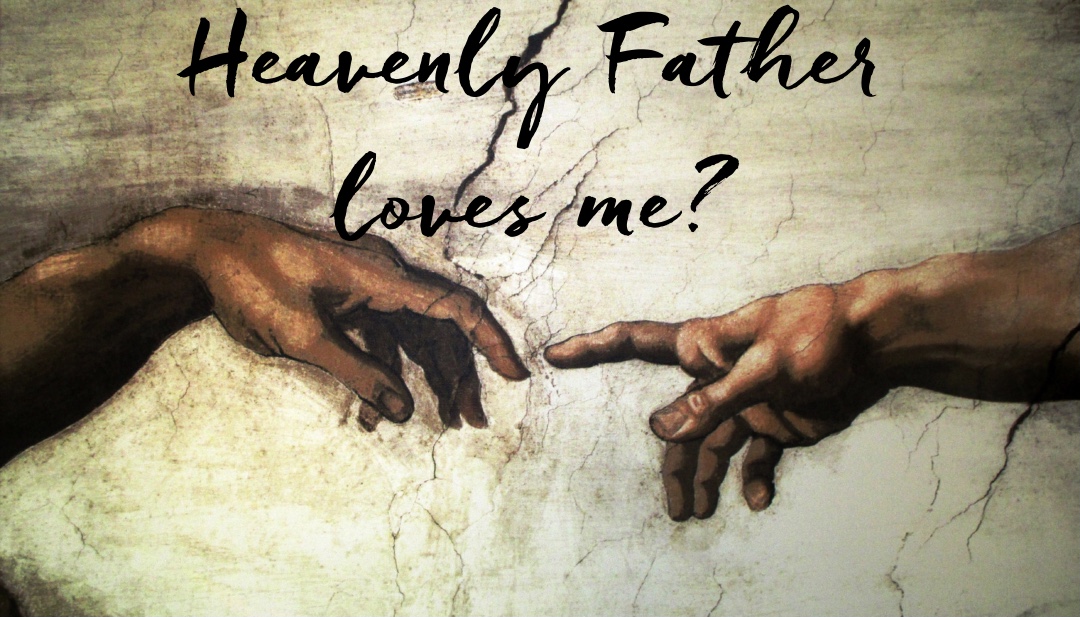
I vividly remember the moment I became a dad. My daughter was a tiny thing, just over five pounds. Holding her, I couldn’t comprehend the strange feelings pulsing inside me. As I looked into her little face, I thought, “I don’t even know you, yet I’m sure I would die for you.”
That was my introduction to the emotions of being a father. I was surprised with the overwhelming affection I felt for this naked, helpless, yet demanding creature. It wasn’t long before another thought rocked my reality. If I, an imperfect human and dad, can feel this strongly about my child, then what does my Heavenly Father feel toward me? The thought brought tears. Can I be loved with such strong affection by a holy, all-powerful God? And just as I was getting lost in these reflections, something warm ran down my arm. My precious little girl had peed on me. But did that change how I felt about her? Not in the slightest!
The Unmoved Mover?
I enjoy theology. For me, it’s thinking about God, what He’s like, what His motivations and desires are and how we humans can possibly connect with Him. Unfortunately, some theological thought can lead people away from a relationship with God as they wander down paths that tarnish His character or drill into only one aspect of the infinite spectrum of His qualities. Thinkers of the past, like Thomas Aquinas and Aristotle, have been referenced to make a case for God as a being who does not experience emotion. It’s called the doctrine of Divine Impassibility. The basic (extremely simplified) idea is that God doesn’t change (which I agree with). Emotions are so changeable (which I also agree with). Therefore, God doesn’t experience emotions (not sure I agree with that part).
The logic makes some sense, but there are some additional matters that need to be considered. While human emotions can have us happy one moment and depressed the next as we respond to circumstances or brain chemicals, God is different. Everything about Him is stable and righteous. Nevertheless, the Bible presents the Almighty at various times as delighted, grieved, joyful, regretful, angry and tender. It’s always in the context, however, of His righteous character interacting with the imperfect, unrighteous ones He loves—never merely out-of-control, knee-jerk impulses. His goodness and holiness are constant throughout the scriptures. We could say that His emotions do not control Him, but at various times they highlight what He values. Overall, it appears to me that God has feelings and that He is rightly moved by them.
A Father’s Heart
The New Testament carries a strong theme of God as our Father. Does that mean He has the feelings of a dad toward His kids? I think so.
Read More Choose This Day